- Art Market
- Artist Careers
- Strategy & Positioning
- Visibility
Why Many Artists Work Below Their Worth
 AI-generated
When Quality Alone Is Not Enough
Artistic quality is a necessary but not a sufficient condition for economic success in the art market. Between studio and auction, between studio and screen lies a quiet but decisive space: the way value is perceived, negotiated, and made visible. This is exactly where most misunderstandings about artist prices arise—and where it is decided whether a practice becomes culturally relevant and economically sustainable at the same time.
 AI-generated
1. Why Many Artists Struggle Financially Despite Quality
The global art market is growing moderately, and sales are rising again, as the current Art Basel & UBS Global Art Market Report shows—and yet the everyday lives of many artists remain marked by financial uncertainty. While works fetch record sums at top auctions, numerous positions in contemporary art struggle with unclear income and fragile fees. The mid-market is considered a growth area, but remains tense: precisely the segment in which many professional artists are located.
The core of the problem rarely lies solely in the quality of the work. Creative excellence is a prerequisite, but art market prices do not arise in a vacuum. They are the result of visibility, context, trust, and the ability to locate an artistic practice clearly. Where these factors are missing, artists are structurally undervalued—regardless of their actual artistic level. Especially in a digitally shaped market environment, how consistently artists build visibility and digital reputation decides whether their works are perceived as worth collecting and holding.
Added to this is a cultural misunderstanding: the notion that “the work speaks for itself” overlooks that art always also has to be communicated—through exhibitions, texts, contextualization, presence in relevant spaces. Those who leave this space to others also leave them the interpretive authority over value and price.
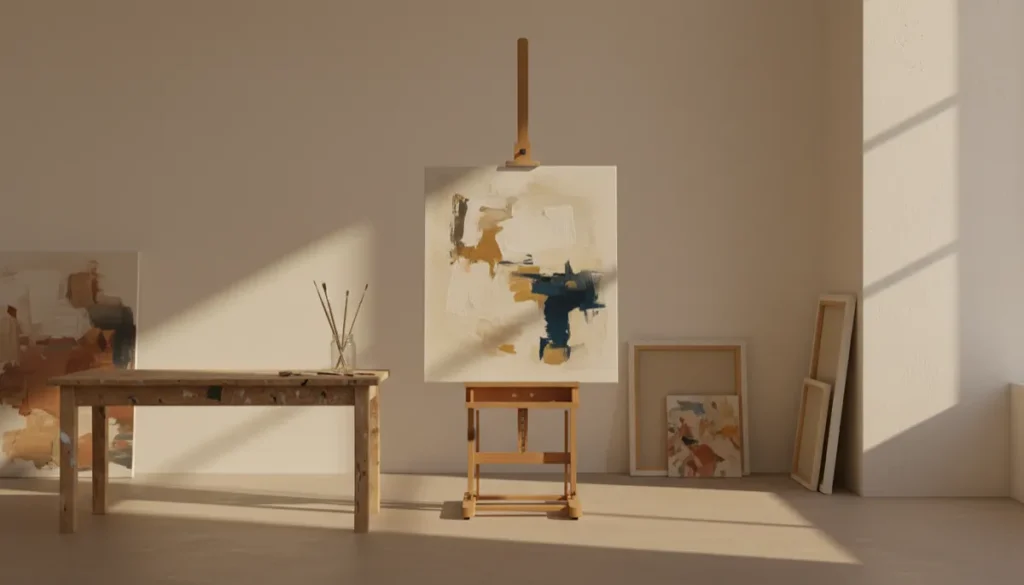 AI-generated
Between studio and market, it is decided whether quality is read as value or as coincidence.
2. Why Artist Prices Are Often Set Too Low
Undervalued fees and sales prices that are too low are rarely pure miscalculations. They often reflect a missing artist positioning. Those who do not clearly formulate what their own practice stands for, which cultural field it moves in, and which collectors they address inevitably end up in a diffuse, price-sensitive segment of the market. There, art is negotiated mainly through comparison and discounts—not through context and relevance.
- Missing positioning: Without a precise artistic placement, it remains unclear why this particular work should have a certain price—and not any other.
- Lack of market communication: Those who talk only about motifs and techniques, but not about themes, discourses, and references, forgo a large part of their possible value.
- Uncertainty about one’s own worth: Many artists calculate prices backwards—starting from the worry of having to remain “still affordable,” instead of starting from a clear art market strategy.
- Fear of rejection: Higher prices are often understood as a risk, not as a filter. Yet it makes strategic sense to address those collectors who are willing to invest in a position over the long term.
- Missing strategic visibility: Without consistent presence—online, in exhibitions, in relevant publications—the basis for stable price levels is missing.
Artist prices are thus often set from an emotional reflex: “What still feels justifiable right now?” Thought through strategically, however, they should be derived from positioning, market segment, planned development, and desired collector structure. This is exactly where professional art marketing comes in—not as loud advertising, but as a structured translation of artistic substance into comprehensible arguments for value.
3. The Connection Between Perception and Value
Prices never arise in isolation. They are always embedded in a narrative: Where does a name appear? In which contexts is a work shown? Who talks about it, who collects it, in which spaces does it hang? Art market prices reflect not only material, time spent, and format, but also the strength of cultural embedding. Reputation directly influences willingness to pay—and reputation emerges over time, through consistency and visibility in the right contexts.
Digital reputation is long since no side issue. For many collectors, first contact with a position happens online: via a website, a curated profile, a recommendation on a platform like Favori Art, or through editorial contributions. Those who establish a clear, calm, and high-quality presence here build trust before a price is even named. Premium positioning in the digital space is thus not a stylistic device, but an economic factor.
 AI-generated
Perceived value arises where artistic work is framed and placed precisely.
Cultural context creates trust: a consistent appearance, precise texts, a clear visual language, and integration into curated environments signal to collectors that a position is being led seriously. Premium perception gradually develops a market value that reaches beyond individual sales—toward long-term collections, institutional interest, and more stable price structures.
4. Why Strong Artist Brands Can Command Higher Prices
The term “brand” often feels irritating in an art context. But understood as a condensation of stance, language, imagery, and presence, artist branding describes exactly what unites successful positions: a clear, recognizable identity that goes beyond individual works. Strong artist brands can command higher prices because they offer orientation—for galleries, curators, collectors, and media.
- Clear positioning: A precise focus—thematic, formal, or discursive—makes it possible to locate a practice unambiguously within the field of contemporary art.
- Consistent communication: Texts, images, statements, and exhibitions follow a recognizable logic instead of changing arbitrarily.
- High-quality digital presence: A carefully designed website, precise content, and calm, uncluttered online communication function as spaces of trust—for example in the form of curated projects or programs like Favori Flow.
- Strategic visibility: Presence in suitable contexts—selected fairs, platforms like Favori Art, relevant media—instead of blanket, unspecific activity.
- Cultural relevance: A practice that visibly engages with the themes of its time creates connectivity for collectors, institutions, and discourses.
In this understanding, artist branding does not become surface, but the structured translation of a practice. It makes comprehensible why certain artist prices are justified—and why they are allowed to develop over time.
5. The Most Common Mistakes Many Artists Make
Those who want to position their work seriously in the market face a double task: artistic depth and strategic clarity. Typical stumbling blocks repeat themselves strikingly often—regardless of medium or career stage:
- Talking only about works: Series, formats, techniques—but hardly anything about stance, references, trajectories of development. The larger context thus remains invisible.
- No strategic pricing logic: Prices arise from spontaneous decisions, not from a comprehensible structure that takes format, edition, demand, and market segment into account.
- Inconsistent communication: Different imagery, changing tone, an unclear biography—all of this makes it harder for collectors to build trust.
- Missing digital reputation: No up-to-date website, scattered information, blurry images. A substantial part of creative visibility thus remains unused—especially in the segment where artpreneurs and independent positions increasingly get in touch directly with collectors.
- Too much orientation toward the competition: Prices are aligned with others instead of being developed from one’s own art market strategy. This leads to interchangeability—and in the long run to a devaluation of one’s own work.
These mistakes are less an expression of unprofessionalism than of missing structures. This is exactly where specialized offerings come in, such as the services of Favori Media, programs for creative entrepreneurs, or accompanying formats for artpreneurs: they create frameworks in which artistic practice and strategic clarity can come together.
6. Concrete Strategic Recommendations
Those who want to lead their work out of structural undervaluation need fewer loud gestures than clear decisions. Some strategic guidelines can be formulated—regardless of whether you sell painting, photography, sculpture, or digital art:
- Develop prices strategically instead of emotionally: Define a clear grid: Which formats fall into which price band? How do prices develop with growing demand, institutional acquisitions, or important exhibitions? Document this logic—for yourself and for your partners.
- Sharpen your artistic positioning: Formulate precisely what your practice stands for, which questions it asks, which discourses it moves in. A clear text on your website can achieve more here than many individual social media posts.
- Build digital reputation: See your online presence as a curated space—from your own website to platforms like Favori Art to carefully selected collaborations. Consistency and quality of presentation are decisive here.
- Use your website and content as spaces of trust: Show not only works, but also processes, backgrounds, references. A calm, well-structured presence—for example as part of a strategy developed together with Favori Media—conveys to collectors that your practice is thought through for the long term.
- Establish long-term visibility: Instead of short-term peaks, it is about continuous presence—in exhibitions, publications, programs like Favori Flow, or comparable formats. Repetition in high-quality contexts builds trust.
- Make cultural context visible: Connect your work with the themes, places, and communities in which it emerges. Especially in the field of contemporary art, value arises where practice, context, and stance are recognizably connected with one another.
 AI-generated
Galleries, websites, and platforms become spaces in which pricing logic and trust come together.
In this sense, selling art is not the opposite of artistic integrity, but its consequence: those who take their own work seriously create structures in which it can also be sustained economically. Strategic art marketing then does not mean adapting a practice, but making it visible more precisely—for those who are willing to invest in it.
7. Conclusion: Value, Perception, and Long-Term Careers
Artist prices do not arise solely from effort, material, or format. They are the result of an interplay of artistic quality, clear positioning, cultural context, and strategically built visibility. Perception and trust thus become central currencies in the art market—especially for those who operate in the middle segment between emerging and blue chip.
Those who understand their practice as a long-term artistic and economic task will not leave pricing decisions to chance. Instead, the question moves to the center of how a position can develop over the years: Which collectors should support it? In which spaces should it become visible? Which narrative should condense around it? Long-term visibility—analog as well as digital—thus becomes the foundation of sustainable artist careers.
Long-term economic success rarely arises by chance. What matters is how clearly artistic quality is perceived, classified, and communicated. Favori Media supports artists in building strategic visibility, positioning, and sustainable reputation in the art market—from digital presence to curated platforms like Favori Art to structured support for artpreneurs and creative entrepreneurs.