- Artist Careers
- Strategy & Positioning
Why Designers Need More Than Aesthetics
Why designers need more than aesthetics today
 AI-generated
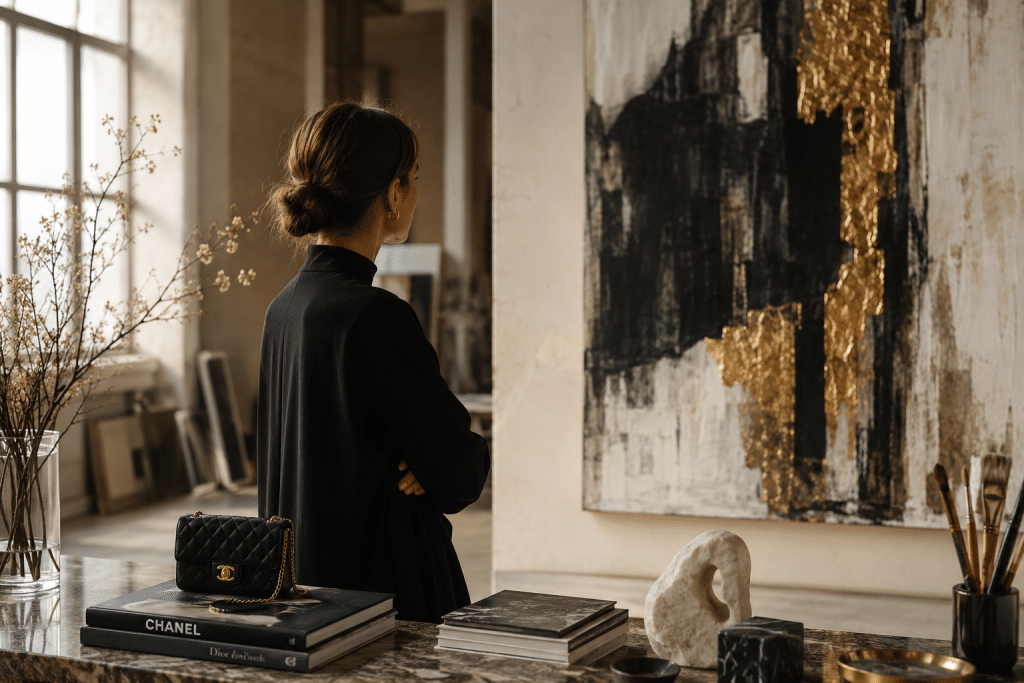
In many studios and agencies, a quiet shift has taken place: while visual quality keeps rising, it is at the same time becoming harder, as a designer, to take on a distinct role in the market. Clients no longer compare only portfolios, but entire appearances—from the website to search results to the way a studio talks about its work. Design positioning thus becomes a strategic discipline that reaches far beyond pure questions of form.
 AI-generated
Why Good Design Alone Is No Longer Enough Today
In nearly every segment—interior, graphic, digital, product—a professional aesthetic has become a basic prerequisite. Rendering quality, typography level, material staging: the threshold above which something feels “well designed” has risen significantly in 2026. Platforms, AI-supported tools, and globally visible references level the formal standard. For clients, this means: many works look “right”—and yet feel interchangeable.
At the same time, expectations are shifting. Studies on current design trends show that empathy, practical value, and cultural resonance are moving further into the foreground. Human-centered design, circular materials, multisensory brand identities—all of this makes clear that design is today read as part of larger contexts, not as an isolated object. Those who merely deliver beautiful surfaces without thinking about context and stance lose relevance, even if the formal level is high.
For designers and creative entrepreneurs, this means: the real difference arises less in the pixel or the profile of the joint, and more in how clearly one’s own role in the cultural, economic, and societal fabric is defined. Design positioning becomes the filter through which aesthetics gains strategic sharpness in the first place.
Why Many Designers Are Perceived as Blurry
That many studios and solo practices are perceived as blurry despite high quality has rarely to do with a lack of talent. What is often missing is a consistent, strategic positioning. Websites show impressive images, yet it remains unclear what the firm actually stands for: which topics it pursues consistently, which questions it answers better than others, which kind of clients are really meant. The consequence: the brand feels diffuse—and does not stick in memory.
Added to this is that communication is often reduced to the portfolio. Project galleries replace statement texts, references take the place of a clearly formulated brand identity. Many designers talk exclusively about the “what” of their work (hotel, corporate identity, packaging), but hardly about the “why” (which cultural tensions, which social or ecological questions, which entrepreneurial goals). In a market increasingly shaped by cultural brands and conscious consumer decisions, this reduction to the visual feels like a missed opportunity.
Blurry perception also arises from inconsistent appearances: an Instagram feed that speaks differently than the website; a pitch deck that sets different priorities than the portfolio; personal statements that do not correspond with the digital external presentation. Designer branding in this sense is less a question of the logo than of inner logic: how does everything come together into a clearly legible picture?
The New Importance of Design Positioning
When markets become denser and aesthetic standards more homogeneous, the level of differentiation shifts. People do not buy only an object or an interior concept, but a context—and with it, trust. They choose studios whose perspective fits their own questions: sustainability, inclusion, cultural resonance, biophilic design, multisensory experiences. Design positioning describes exactly this clearly formulated perspective: what does a practice stand for, beyond style?
Strong designers therefore do not develop an arbitrary “USP,” but a reliable, recognizable stance. Some focus on circular material concepts and establish themselves as contacts for circular interior design. Others work at the interface of graphics and space and position themselves as experts for multisensory brand spaces. Still others use anti-AI crafting and handcrafted textures to anchor brands in the tension between digitality and haptics. In all cases, it is about strategic positioning: not becoming narrower, but clearer.
 AI-generated
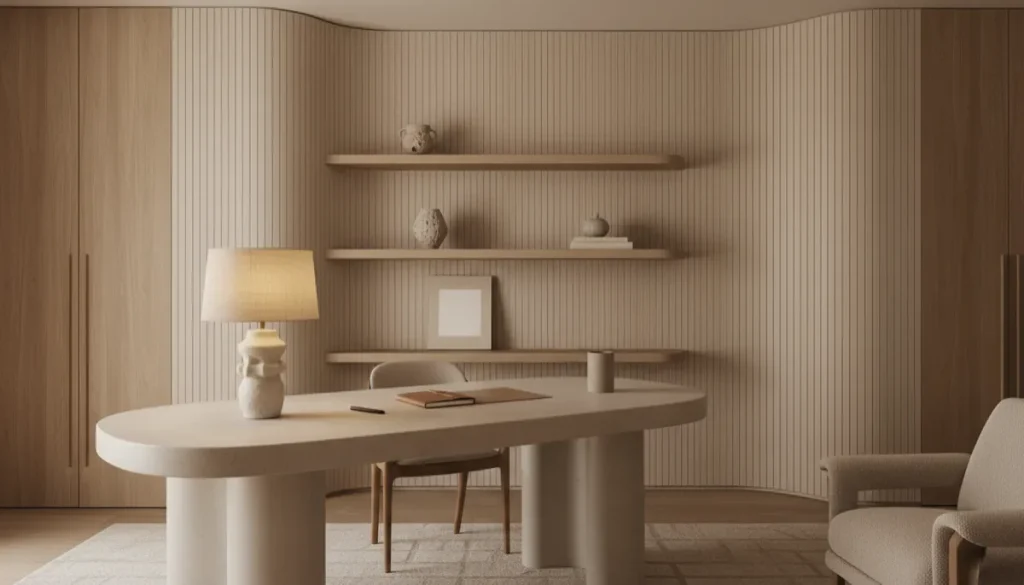
Precisely curated spaces communicate stance long before a concept is explained.
For creative brands, this gives rise to a new understanding of premium positioning: premium means less price level than clarity, consistency, and cultural embedding. A studio that places its projects within larger societal discourses—for example on sustainability, inclusion, or urban life—makes its work connectable. Cultural marketing and design marketing grow together here: it is about making visible what role design actually plays in people’s everyday lives.
Why Digital Reputation Is Becoming Decisive in the Design Market
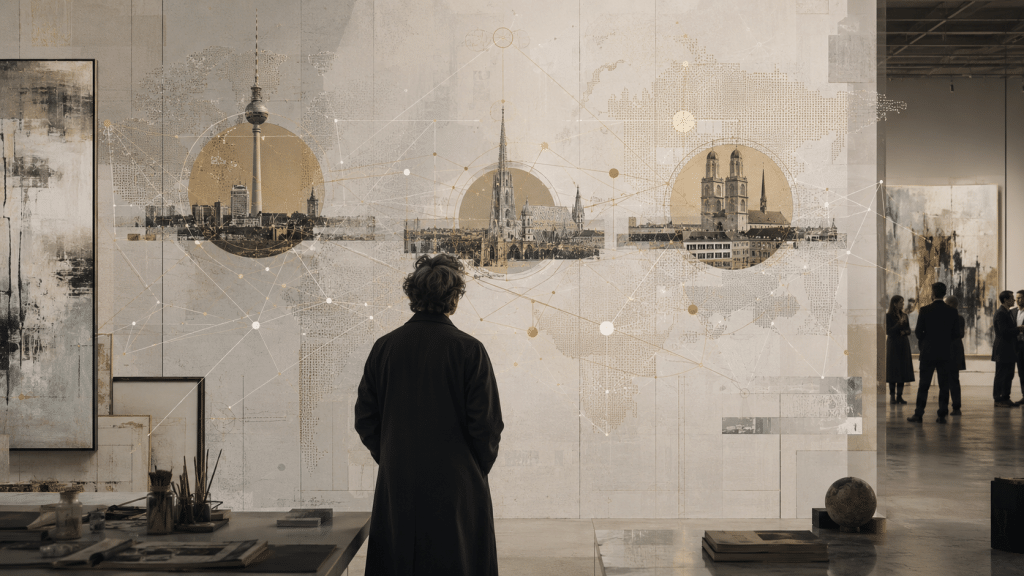
Before a conversation comes about, research almost always takes place today. Clients google names, compare websites, read interviews, scroll through social feeds. Digital reputation thus shapes the image of a studio before any contact is even made. For designers, this means: your own creative visibility is long since not just a question of portals like Behance or Dribbble, but an overarching question of public presence.
Especially in the premium segment, clients pay attention to how consistent a studio feels online: does the website feel like a curated brand space or like a random catch-all? Are its own projects commented on—with insights into processes, decisions, stances—or merely exhibited? Are there publications, essays, talks that make its own perspective on design and society visible? All of this feeds into designer branding long before a proposal is written.
Platforms like Favori Art, but also specialized formats for artpreneurs and creative entrepreneurs, show how strongly curated digital spaces can shift perception. Those who appear here with a clear, recognizable voice build up, over time, a reputation that reaches beyond individual projects. Visibility becomes a long-term asset—and a central component of any serious design positioning.
The Most Common Mistakes of Creative Designer Brands
Those who want to sharpen their brand often begin with logo, color world, layout. The typical pitfalls, however, lie deeper—in strategic decisions that are rarely made explicitly. One of the most common mistakes is a positioning that is too broad: “We do everything, for everyone.” This openness seems inviting at first glance, but makes any clear classification harder. Specialization is then wrongly confused with limitation, although in truth it offers orientation—for clients as well as for one’s own team.
A second mistake: purely visual communication without strategic framing. Projects are presented in perfect imagery, but without context. Neither does it become visible which problem was solved, nor what role design plays in a client’s business model or cultural position. Design thus remains decorative—and loses strategic radiance. Cultural brands in particular, however, seek partners who understand their topics and can translate them into precise images, spaces, and interfaces.
Added to this is often a missing long-term visibility strategy. Many studios communicate project-driven: when something new is finished, it is shared; in between, there is radio silence. No continuous narrative thread arises, no evolving perspective. Creative brands, however, grow through repetition, deepening, nuance. They emerge when, over the years, a particular way of looking at the world is reflected in projects, texts, talks, and collaborations. Without this long-term commitment, design positioning remains a snapshot—instead of becoming a stable reference.
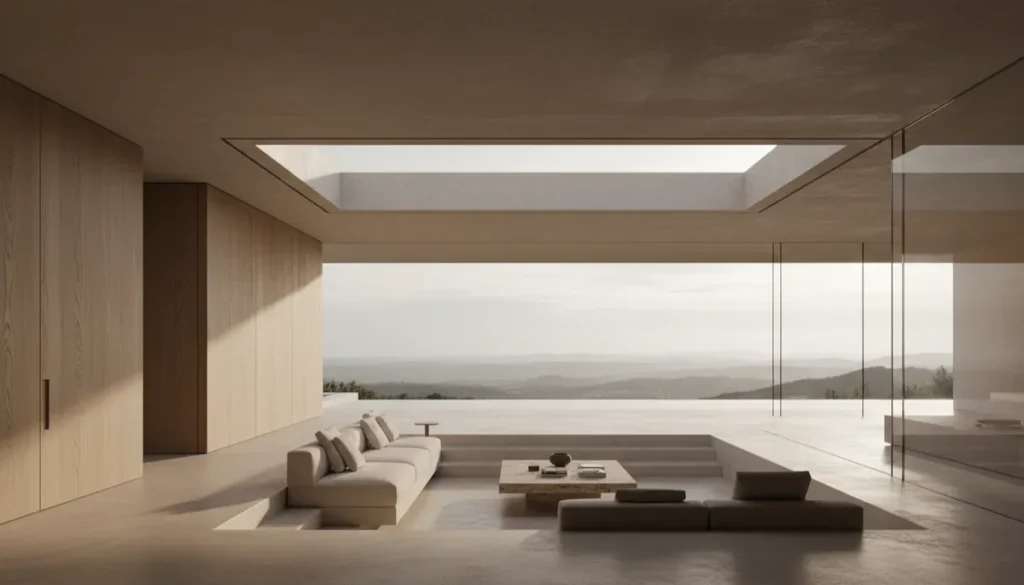 AI-generated
Clarity in space and brand arises through deliberate reduction and consistent selection.
Strategic Recommendations for a Clear Design Positioning
A sharper positioning rarely begins with a new logo, but with a more precise self-description. A first step can be to formulate your own design stance in a few sentences: What kind of world do you want to favor with your work? Which tensions interest you in particular—for example between digitality and haptics, between sustainability and comfort, between local culture and global references? This stance is the foundation on which brand identity and designer branding can be built.
In this sense, your own website should be understood not as a portfolio repository, but as a curated brand space. Which projects are shown—and which deliberately are not? Which texts frame the works? How is language used to convey not only functions but a perspective? Offerings like Favori Flow start exactly here and support studios in structuring digital spaces so that they convey stance, focus, and quality clearly—and thus pay into digital reputation over the long term.
Another lever is the development of high-quality content: essays, case studies, insights into processes, curated references. Those who regularly show how decisions come about, how materials are chosen, spaces composed, or graphic systems conceived make their own expertise visible. Especially for artpreneurs and creative entrepreneurs, this can make a decisive difference: they are perceived not only as suppliers of aesthetics, but as partners in strategic questions of brand management and cultural development.
Finally, it pays to make cultural relevance visible in a targeted way. This can happen through collaborations with institutions, contributions to discourses, exhibition participations, or curated projects. Platforms like Favori Media bundle such activities and make them connectable—for clients, press, and other creatives. Those who deliberately cultivate their digital reputation create the foundation for sustainable, trusting relationships in the market.
Calm Conclusion: Stance, Context, and the Role of Favori Media
Looking at current developments in design, one thing becomes clear: aesthetics remains essential—but it is no longer the sole differentiating factor. Design positioning arises where form is connected with clarity, stance, and context. Where studios show not only how something looks, but explain why it is designed that way and what role it plays in a larger cultural or entrepreneurial fabric. Trust grows when this narrative is consistent, comprehensible, and experienceable across different channels.
Long-term visibility does not arise from aesthetics alone. What matters is how clearly a creative stance is perceived and communicated—in images, in spaces, in texts, in search results. Favori Media supports designers and creative brands in building strategic visibility and long-term digital reputation—in interplay with platforms like Favori Art, process-accompanying offerings like Favori Flow, and an understanding of the needs of contemporary artpreneurs. In a market in which good design has become a matter of course, this clarity becomes the real premium resource.