
- Cultural Marketing
Filling Classes: How Private Art and Dance Schools Win Students Online
Why people choose the clearest school, not the loudest one
 AI-generated
Filling classes does not work through louder advertising, but through clarity. People looking for a school want to understand quickly whether level, schedule and atmosphere fit, and they want to experience something before they sign up. A clear website, a well-kept Google profile and regular glimpses into your classes do more than one-off campaigns.
An art or dance school can have a wonderful offering and still struggle with empty spots. This is usually not about the quality of the teaching, but about interested people not finding the school or not understanding whether it is right for them.
Why classes stay empty even when the offering is good
People looking for a class compare. They google, look at the website and the Google profile, read reviews and ask around. The decision is often made within minutes and on a phone. Where class times, prices, target group or registration are not easy to find right away, people click on.
So it is often not the school with the best teaching that gets chosen, but the one that is easiest to understand.
How people really choose a school
- Parents mainly ask themselves whether their child will be in good hands: atmosphere, teachers, fitting age group, safety.
- Adults ask themselves whether the class fits their daily life and whether they can trust themselves to start. Appearing beginner-friendly is often decisive here.
- Both want to experience something before registering: a trial class, an introductory course, a face and a voice.
Trust grows through people and spaces, not through buzzwords. This is as true for the art market as it is for the classroom. How this works in a broader context is described in Trust in the art market.
The website as a path to registration
A school’s website is not a shop window, but a path to registration. It should work without detours:
- A course overview sorted by age and level.
- A separate page per class with description, schedule, price and contact person. This helps people and search.
- Registration in a few steps, also on mobile.
- The trial class visible, not hidden.
- The teachers with a photo and a short text.
- Address, directions and contact reachable on every page.
If you do not want to handle registration, confirmations and reminders by hand, you can bundle them in a system such as Favori Flow. First it matters that the path is clear, then that it can be automated.
Local visibility
A school is usually searched for nearby. That is why the Google Business Profile counts almost as much as the website:
- Keep categories, opening hours, photos and class list up to date.
- Write name, address and phone number identically everywhere.
- Ask for reviews actively, honestly and kindly, and reply to each one.
Continuity instead of busyness
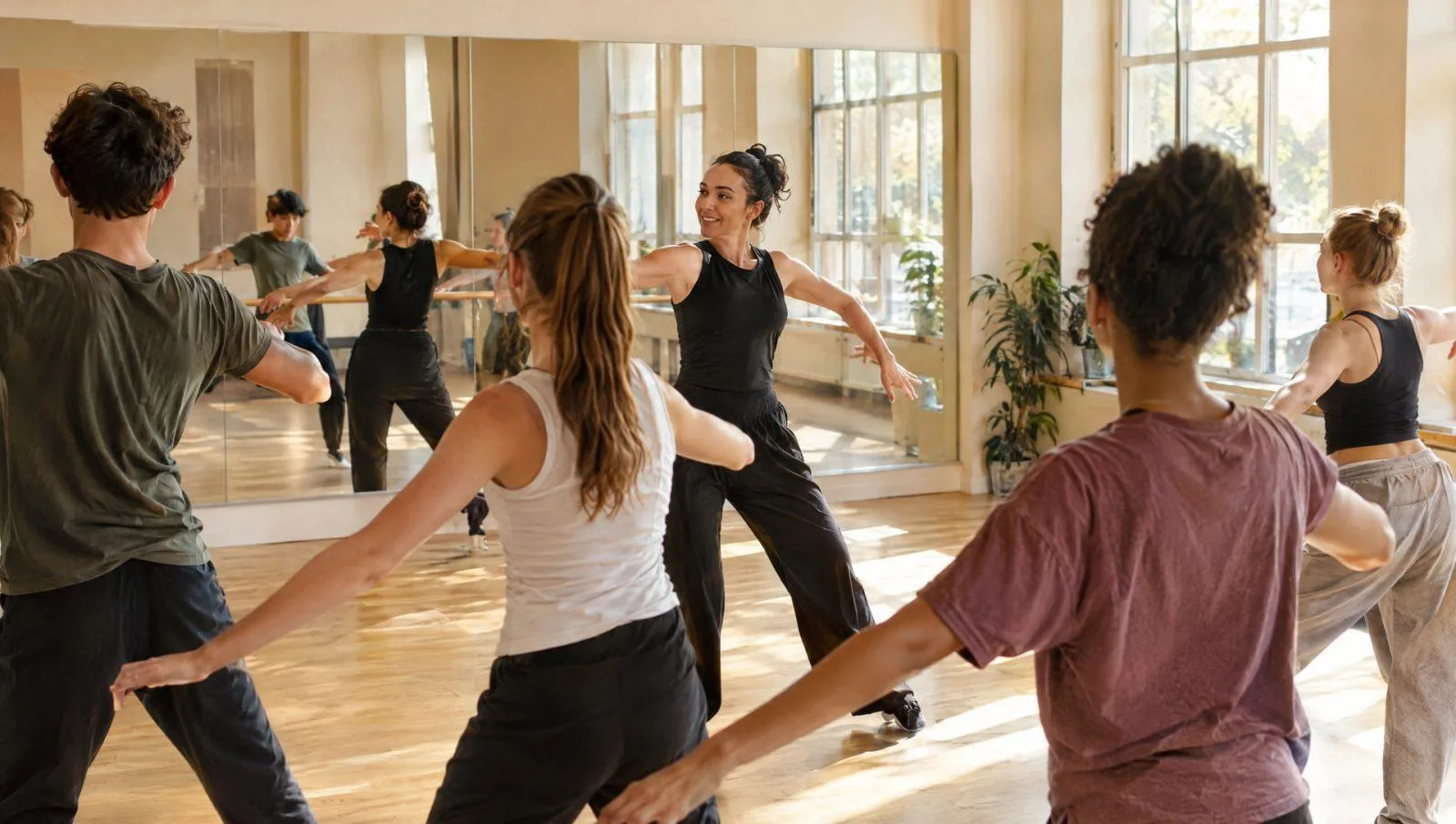
Showing something good once a month works better than something hectic every day. Glimpses into classes, recitals, small exhibitions by participants and introductions of the teachers work well. They show the atmosphere that a class schedule alone cannot explain. How important documentation is for fleeting art forms is covered in Dance and the documentation problem.
A school that is understandable, findable and approachable rarely needs to get louder. It simply gets chosen more often.
Frequently asked questions about filling classes
What must a website of an art or dance school include?
A course overview by age and level, clear schedules and prices, registration in a few steps (also on mobile), a clearly placed trial class offer, an introduction of the teachers, plus address and directions.
How do I handle photos of children in class?
You publish images of children only with written consent from their parents or guardians. Alternatively, rooms, hands, back views or materials can show the atmosphere. If you are unsure, get legal advice.
How do I get more reviews on my Google profile?
Ask participants in person when the mood is good, for example after a performance or at the end of a course, and send them the direct link. Reply to every review. Buying reviews or demanding them in exchange for perks goes against Google’s guidelines.


