
- Visibility
Cultural Institutions: Digitalization and New Audiences
Digitalization of cultural institutions: new audiences
 AI-generated
Cultural institutions digitalization does not mean putting events online. It means reaching new audiences without losing the existing one, and telling your own work digitally in a way that stays understandable.
In many cities, a look at the event calendar feels familiar, and at the same time unsettling. The programs are rich, the venues professionally curated, yet part of the seating remains empty. Not because the offering has become weaker, but because the paths to culture have shifted. Anyone looking for culture today rarely starts at the box office, but in the digital space. This is exactly where it is decided which cultural institutions reach new audiences, and which remain invisible.
 AI-generated
Why Many Cultural Institutions No Longer Reach New Audiences
Many cultural institutions work with communication logics that date from a time when the daily newspaper, the city magazine, and the poster formed the central bridge to the audience. These channels still exist, but their impact is fragmented. Media use is now spread across messengers, search engines, specialized newsletters, niche platforms, and curated communities. Attention is not scarce, but radically distributed and heavily filtered.
Classic cultural communication (program flyers, sporadic social media posts, press releases) mainly reaches those who are already interested. For new audiences, who tend to perceive culture as part of a broad experience ecosystem, such signals feel too abstract. They look for orientation, context, and points of connection to their everyday lives, not just information about start time, venue, and artist names. Studies on the experience economy show that people increasingly seek experiences that combine personal development, community, and meaning, cultural institutions offer exactly that, but often do not communicate it in this language.
Added to this: many venues still address their cultural audience as a homogeneous mass. Yet expectations diverge strongly, between Gen Z, who discover culture through short, visual impulses, and an older audience that appreciates in-depth texts and calm formats. Those who do not take these differences into account in cultural marketing remain barely distinguishable in the digital noise.
How Cultural Perception Is Changing
Culture is increasingly experienced before the visit. People first encounter exhibitions, stagings, and programs as an excerpt on the smartphone, as an image, a short text, a recommendation in a newsletter, or a search result. Digital visibility is thus not only a marketing instrument, but the first part of the cultural experience itself. It creates expectations, moods, interpretive offerings.
When museums take digitalization seriously, a new form of pre-visit communication emerges: online texts, curatorial essays, interviews, background pieces, and digital archives frame what will later become visible in the space. Theater marketing uses digital channels to make rehearsal processes, directorial thoughts, or societal references visible. Cultural outreach thus begins not in the foyer, but in search engines, feeds, and newsletters, often days or weeks before the actual visit.
At the same time, the pace is changing. Countermovements to permanent acceleration (slow living, mindful media consumption, “cozy aesthetics”) also shape cultural perception. Many people look for places where they do not feel overwhelmed, but can perceive with focus. Institutions that already mirror this longing in their digital presence (for example through calm imagery, clear texts, and a consistent cultural strategy) are perceived as reliable, trustworthy spaces long before anyone walks through the door.
The New Role of Cultural Institutions
Cultural institutions are long since no longer just places where culture is shown. They increasingly act as independent media brands: they publish, curate discourses, moderate societal debates. Communication is thus not a downstream service, but part of artistic and curatorial practice. Those who develop exhibitions, festivals, or season schedules also decide which narratives become visible in the digital space, and which do not.
This shift requires a different attitude toward digital reputation. For many venues, it has so far been a mix of website, social media channel, and press echo. But cultural visibility today emerges in a web of search results, editorial contributions, recommendations, interviews, podcasts, and curated journals. Those who think these levels together strategically build a brand that has an impact beyond individual productions, and creates trust among new audiences over the long term.
 AI-generated
Architecture, program, and communication together shape an institution’s cultural brand.
Platforms like Favori Media or formats like Favori Art show how cultural institutions can reach a wider public through curated content, interviews, and editorial contributions. They shift the focus away from pure announcement toward a continuous narrative about artistic positions, societal contexts, and institutional stances. Communication thus becomes a cultural offering in its own right, not just an accompanying text.
Digitalization of Cultural Institutions: More Than Social Media
When the digitalization of cultural institutions is mentioned, many first think of social media. But reach alone does not answer the central question: Who finds an institution, why does it remain relevant, and how does trust arise? Digital visibility is a system, not a channel. It includes search engine optimization, editorial content, newsletters, digital archives, hybrid formats, and the way an institution is talked and written about, online as well as offline.
Strategic visibility means that an institution’s central topics, artists, and artistic stances can be found over the long term. Those searching for particular societal questions, aesthetic currents, or regional references should come across well-founded content from the venues, for example via a journal of their own, curated topic pages, or in-depth articles. Search engine optimization thus becomes an instrument of cultural outreach: it ensures that cultural content shows up where people are looking for orientation.
Offerings like Favori Flow or programs for artpreneurs show how cultural marketing is shifting toward long-term ecosystems: instead of one-off campaigns, editorially supported platforms emerge in which institutions, artists, and audiences stay in contact over longer periods. The digitalization of cultural institutions in this sense means understanding digital spaces as part of one’s own cultural infrastructure, not as an appendage of press work.
The Most Common Mistakes Institutions Make
It is striking how similarly structured many digital presences of museums, theaters, art halls, and cultural centers are: program calendar, ticket button, short descriptive texts, occasional social media posts. Functional, but rarely distinctive. Three mistakes appear again and again, and prevent new audiences from finding access at all:
- Purely informational communication: Many texts describe what is taking place, but hardly why it is relevant. Without cultural framing, the offering remains interchangeable: especially for people without prior knowledge.
- Missing emotional and cultural framing: There is a lack of narratives that connect topics, artists, and societal questions. Cultural outreach is limited to guided tours and wall texts instead of being integrated into digital communication.
- Inconsistent digital presence: Different tones, changing imagery, irregular publication: all of this weakens the cultural brand. A clear cultural strategy that connects digital visibility, program, and curatorial stance is often missing.
Added to this is a structural problem: digital communication is often understood as an operational task in day-to-day business, not as a strategic leadership question. As a result, resources for conceptual work, editorial planning, and quality content are missing. The consequence is channels that are filled, but not truly curated, and thus generate little cultural visibility.
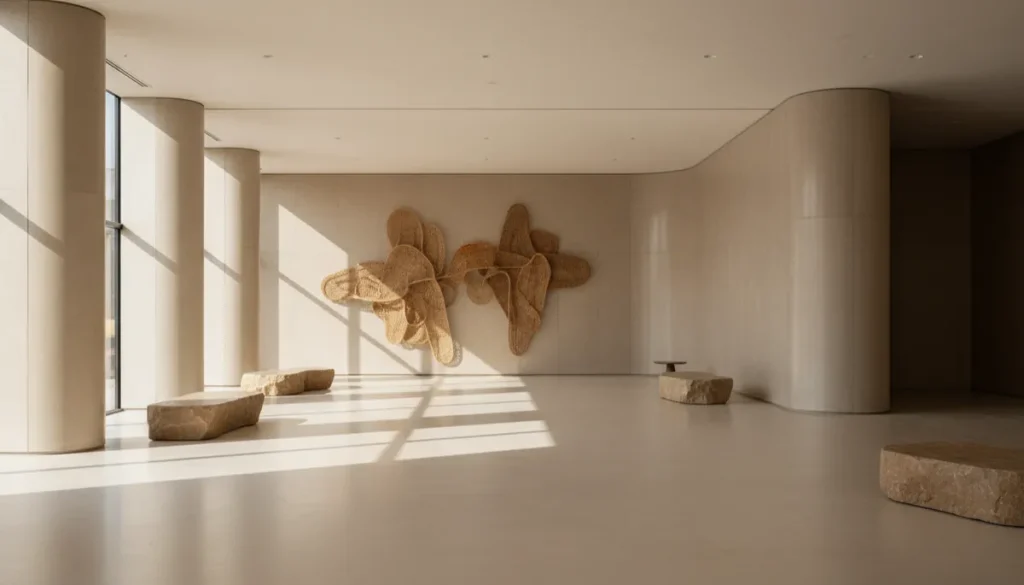 AI-generated
Where communication merely informs, the cultural space often remains unused digitally.
Strategic Recommendations for the Digitalization of Cultural Institutions
How can cultural institutions shape digitalization so that new audiences are not only reached, but also taken seriously culturally? Some strategic guidelines are emerging, regardless of the size or budget of a venue:
- Develop cultural narratives: Instead of promoting individual events, it pays to formulate overarching thematic lines: societal questions, aesthetic focal points, regional references. These narratives form the common thread for cultural marketing, program texts, social media, and editorial contributions.
- Build digital visibility for the long term: Search engine optimization, structured content, and a journal or magazine format of one’s own ensure that cultural content remains findable beyond individual campaigns. A clearly run blog or journal section, like in the Favori Journal, can become the central reference point here.
- Establish editorial content: Interviews, essays, background conversations, insights into curatorial processes. All of this strengthens digital reputation and makes institutional stance visible. What matters is a tone that neither shuts itself off academically nor lapses into advertising language, but remains precise, accessible, and culturally reflective.
- Address audiences in a differentiated way: Different audiences need different access points. For a younger, digitally socialized audience, short visual formats and community-oriented channels can make sense; for a professionally interested audience, rather in-depth texts and newsletters. What matters is tracing both levels back to a consistent cultural brand.
- Create digital spaces of trust: In a time when algorithmic feeds and quick impulses dominate, trust arises through reliability and quality. Regular publications, clear contact persons, a transparent cultural strategy, and a calm, recognizable imagery signal: this institution is a stable cultural point of reference.
Thinking of communication as a cultural experience ultimately means not separating digital and analog spaces. A well-structured website, a carefully run journal, hybrid events, and digital archives are part of the same cultural infrastructure as exhibition spaces and stages. Those who think these levels together create access for people who previously did not feel addressed, without losing the existing audience.
Conclusion: Visibility as Cultural Infrastructure
New audiences do not arise because institutions communicate more loudly, but because they become clearer: in profile, in stance, in the way they appear in the digital space. The digitalization of cultural institutions is thus less a question of technology than of perspective. Those who understand digital visibility as part of their cultural infrastructure invest not only in reach, but in long-term perception, trust, and relevance.
Museums, theaters, art halls, and cultural centers that orient their cultural communication strategically become points of orientation in a fragmented public sphere. They offer not only programs, but also interpretation, context, and spaces for shared engagement, analog as well as digital. In this sense, visibility is not a decorative addition, but a form of cultural public service: it helps decide which voices, stories, and perspectives are anchored in public awareness.
New cultural audiences do not arise by chance. They develop where visibility, context, and relevance are built strategically. Favori Media supports cultural institutions in developing digital visibility and long-term cultural perception sustainably.
How smaller venues and schools present their program clearly online is covered in Filling classes: how private art and dance schools win students online.
Frequently asked questions
What does digitalization mean for cultural institutions?
More than ticket sales and social media: a well-considered digital presence that conveys program, stance and history, and is findable where people search.
How do institutions reach new audiences?
By preparing content so that it is understandable without prior knowledge, and showing it where the desired audiences actually spend their time.
How do you keep the existing audience in the process?
Through continuity in tone and stance. New formats complement the familiar instead of replacing it.


