- Art Market
- Cultural Marketing
- Strategy & Positioning
- Visibility
Creative Visibility: Digital Presence in Cultural Marketing
Creative visibility, why visibility has become the fundamental infrastructure of creative work today
 AI-generated
For creatives, visibility does not mean as much reach as possible, but being found and understood by the right people. It grows from clarity, continuity and context, not from volume.
In many studios, workshops, and institutions, the work has long since become more precise, bolder, and more professional. Yet the way this work becomes visible often still dates from an era of openings, fairs, and printed catalogs. While cultural perception increasingly shifts into digital spaces, numerous creative brands persist in the assumption that their quality will speak for itself at some point. Visibility is thus treated as a downstream measure, not as a structural component of one’s own practice. This is exactly where a tectonic plate is currently shifting in the art, design, and culture ecosystem.
 AI-generated
1. Why Creative Visibility Has Become Indispensable Today
Creative visibility is long since more than the sum of posts, mentions, or press clippings. It forms the frame in which creative quality can be perceived, contextualized, and classified at all. Anyone working in the art market, in photography, in design, or in cultural production today moves in an ecosystem in which perception almost always begins digitally, even when the decisive moment takes place later in physical space.
Curators, collectors, cultural journalists, brands, and institutions research online before they visit a studio, request a portfolio, or develop a program. The first encounter with an artistic position often takes place via a website, a search query, an editorial feature, or a digital publication. This digital presence is thus not merely a side effect, but the primary filter through which creative work is seen. Visibility decides whether a work shows up in the relevant search spaces at all, and with what expectations it is viewed.
Under these conditions, creative quality alone is no longer enough. Without structured cultural visibility, even outstanding work often remains enclosed in niches that do not match its actual ambitions. Visibility influences opportunities, such as invitations to exhibitions, collaborations, residency programs, or brand partnerships. It shapes trust by building digital reputation: how consistent, professional, and distinctive does an artistic or institutional presence feel across different channels? And it expands reach by carrying one’s own creative positioning beyond the immediate circle of acquaintances, into other cities, scenes, and discourses.
For creative brands, galleries, cultural institutions, and artpreneurs, this means: visibility is no longer an add-on improvised after a project is completed. It has become a prerequisite for artistic work to resonate at all in a crowded, fragmented cultural space. Those who ignore this dimension leave their brand reputation to chance, or to the algorithms of other platforms.
2. Why Many Creatives Still Misunderstand Visibility
A central misunderstanding is equating creative visibility with social media. Being visible then means: posting regularly, producing reels, filling stories. The discourse is reduced to platform logics, frequencies, and formats. In the process, it is overlooked that platforms are only surfaces, not a strategy. Those who think of visibility exclusively through social media delegate their own cultural perception to systems that are primarily optimized for short-term attention, not for long-term cultural relevance.
Added to this is a second pattern: the focus on short-term peaks. Many artists, designers, and photographers activate their digital communication mainly around exhibitions, releases, or project completions. In between, long phases of digital silence arise. Visibility is understood as a campaign, not as infrastructure. The result is a sequence of short-term spikes that leave hardly any traces, neither in search behavior nor in the perception of collectors, partners, or new audiences in the art market. Digital reputation remains brittle because it is not supported by continuity.
A third blind spot concerns the missing strategic infrastructure in the background. Many creatives invest a lot of energy in individual posts, but hardly any in the question of how their digital presence works as a whole: What role does the website play? How do editorial content, portfolio structure, newsletter, search results, and social channels interlock? Which terms, topics, and narratives are built up over months and years? Without this architecture, visibility remains fragmented. It generates attention, but no clear creative positioning.
Finally, inconsistent communication makes one’s own brand hard to read. Different tones, changing imagery, contradictory descriptions, and unclear biographies create friction losses. Those who present themselves differently in every channel as a gallery, festival, or studio make it harder for curators, journalists, or potential partners to form a precise idea of their orientation. Visibility thereby loses sharpness, and with it, impact.
3. The New Role of Digital Visibility
Digital visibility is today the space in which cultural perception is prepared. Websites, editorial content, newsletter archives, search results, and digital publications form an image before a person enters the studio, visits an exhibition, or sees a work in the original. For creative brands, this means: the website is not a portfolio appendix, but a curated space in which artistic stance, context, and development become visible. It is a cultural place, not just a technical container.
Search results decide whether and how a position can be found at all. Anyone searching for an artist, a studio, or an institution encounters a choreography of website snippets, profiles, interviews, reviews, and platform entries. This chain forms the first layer of digital reputation. It conveys whether a creative brand is anchored in relevant contexts, whether it appears professional, whether it follows a clear line. Reputation thus arises long before the first direct contact, through the interplay of digital presence, editorial traces, and searchability.
For cultural institutions, galleries, and artpreneurs, this means: visibility has become part of their cultural credibility. An institution whose digital communication consists exclusively of event announcements feels different from a house that continuously offers insights into curatorial processes, collection strategies, and discourses. A gallery that accompanies its artists’ visibility in the art market in a structured way (for example through features, background texts, search-engine-optimized artist pages, and long-term content formats) builds a different kind of trust than a pure showroom. Digital reputation thus becomes a quiet but decisive indicator of professionalism and relevance.
 AI-generated
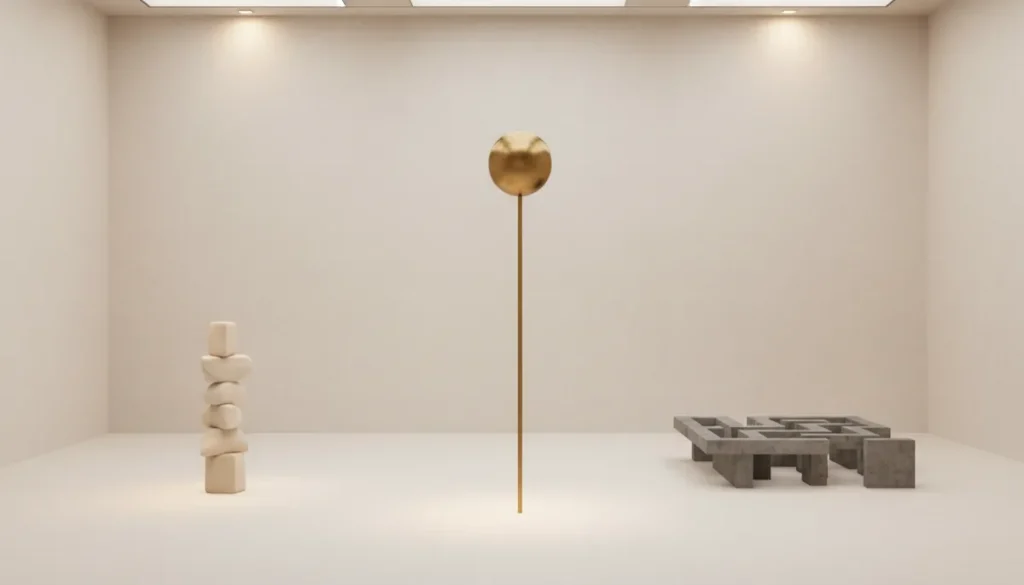
Curated digital spaces translate stance, context & quality into long-term visibility.
4. Why Visibility Is Infrastructure Today
Visibility is today better thought of not as a campaign, but more precisely as infrastructure. Artists need digital spaces of trust, places where their work can be viewed calmly, understood, and located. These spaces arise through carefully built websites, clear catalogues of works, well-structured artist texts, precise biographies, and editorial formats that point beyond individual projects. Platforms like Favori Art can serve as additional curated layers that deepen visibility in the art market without tipping into fleeting social media mechanics.
Institutions, in turn, need long-term findability. Programs, exhibitions, and collaborations unfold their impact not only at the moment of the opening, but in how researchable they remain later. A structured content architecture (for example through dossiers, topic pages, archive structures, and search-engine-optimized project pages) makes cultural work permanently accessible. Visibility becomes infrastructure here because it makes it possible for discourses that are conducted today to still be connectable in two or five years. Projects do not disappear into newsfeeds, but become part of a long-term digital presence.
For creative brands, this means developing narratives instead of individual campaigns. A fashion brand, a design studio, or a cultural festival that organizes its communication exclusively around individual releases forgoes the chance to build a coherent story. Strategic positioning, however, arises precisely from this continuity: from recurring themes, a clear visual language, a consistent tone, and editorial formats that give insight into stance, processes, and collaborations. Visibility thus becomes the load-bearing framework of a brand, not the decorative surface at the end of the value chain.
On an individual level, this infrastructure supports the long-term career development of artists, photographers, designers, and artpreneurs. Those who begin early to build a coherent digital presence, use strategies like Favori Flow for continuous cultural marketing, and communicate their creative positioning clearly create the foundation for opportunities not to arise by chance, but to be able to dock on purposefully. Visibility thus becomes a form of infrastructure that stabilizes careers instead of only illuminating them at isolated points.
5. The Most Common Mistakes Creative Brands Make
Those who understand creative visibility as infrastructure quickly recognize why many common patterns lead nowhere. Some mistakes are particularly widespread, and strategically costly.
- Prioritizing only short-term reach: Many creative brands orient themselves toward metrics like views, likes, or followers. These numbers can provide hints, but do not replace strategic positioning. Short-term peaks rarely generate sustainable cultural visibility if they are not embedded in a clear content line.
- Missing positioning: Without a clear answer to the question of what an artistic practice, a gallery, or a festival stands for, visibility remains blurry. Those who try to address everyone often truly reach no one. Strategic positioning means focusing deliberately: in topics, aesthetics, references, and formats.
- No consistent communication: Different imagery, changing tones, and unclear messages create friction. If website, social channels, press material, and exhibition media do not speak to one another, brand reputation suffers. Consistency is not an aesthetic luxury, but part of digital reputation.
- Digital presence without strategic context: Many websites are formally solid, but empty in content. They show images, yet provide hardly any context, background, or narrative. Without editorial layers (essays, interviews, statements, case studies) cultural visibility remains flat. Digital communication is then reduced to surfaces instead of meaning.
- No long-term content architecture: Individual blog posts, scattered newsletters, or sporadic features have only limited impact if they are not integrated into a clear structure. A well-thought-out content architecture, such as Favori Media develops with creative brands, ensures that content reinforces itself, increases searchability, and remains relevant over the years.
6. Concrete Strategic Recommendations for Creative Visibility
How can visibility be built concretely as infrastructure, beyond short-term campaigns and platform trends? Some strategic guidelines have proven particularly sustainable in working with artists, designers, photographers, galleries, and cultural institutions.
Think of Visibility for the Long Term
Creative visibility unfolds its impact over years, not weeks. Instead of relying exclusively on project communication, it pays off to develop a multi-year perspective: Which topics should be permanently connected with your work? Which terms structure your cultural visibility in the art market? Which digital spaces do you want to occupy deliberately, for example via search engines, editorial collaborations, newsletters, or specialized platforms like Artpreneure?
Develop a Clear Positioning
Strategic positioning is the foundation of any meaningful visibility work. It answers what your practice stands for, which cultural questions it negotiates, which references it invokes, and for whom it is relevant. This clarity should be reflected in all texts, descriptions, and formats: from the artist biography to project texts to press kits and digital dossiers. Without this sharpness, digital communication remains interchangeable, regardless of its design quality.
Build High-Quality Content & Editorial Formats
Visibility arises not only from showing results, but from sharing context. Editorial formats (interviews, essays, studio notes, curatorial texts, case studies) make it possible to embed your work in larger cultural contexts. They strengthen your digital reputation by showing how reflective, discursive, and distinctive your practice is. An editorially run journal, such as the one that emerges in the environment of Favori Media, can serve as a central instrument for continuously building cultural visibility.
Understand the Website as a Cultural Space
A website is not only a technical project, but a curatorial space. It should be designed so that visitors can understand your work intuitively: through clear navigation, precise groups of works, comprehensible chronologies, and carefully placed texts. The website functions as the anchor of your digital presence, social media channels, newsletters, editorial contributions, and platform profiles should lead back to it. Those who understand the website as a quiet but central place of creative visibility invest in an infrastructure that endures independently of platform cycles.
Cultivate Digital Reputation Strategically
Digital reputation does not arise by chance. It can be built deliberately by paying attention to the contexts in which your work appears, how you are quoted, which images circulate, and how your biography is worded. Collaborations with curated platforms, strategically placed interviews, essays in trade media, or joint formats with galleries and institutions contribute to cultural visibility. Strategies like Favori Flow start exactly here: at the connection of continuous digital communication and deliberate care of your brand reputation.
Connect Visibility with Cultural Relevance
Being visible is not an end in itself. What matters is in which cultural spaces your presence becomes tangible and which discourses you help shape. For artist visibility in the art market, this means not only being present on sales platforms, but taking place in curatorial contexts, collecting discourses, and critical debates. For cultural institutions, it means not only announcing programs but framing them in terms of content. For creative entrepreneurs, it means thinking of their brands not only as products, but as cultural players. Visibility & cultural relevance reinforce each other when they are strategically interlinked.
7. Calm Conclusion & CTA
Creative visibility is no longer an additional measure supplied after a project is completed. It has developed into a fundamental infrastructure of cultural perception, for individual artists as well as for galleries, festivals, museums, studios, and creative brands. In a landscape in which perception begins digitally, reputation forms before first contact, and cultural credibility is decisively shaped by digital presence, the quality of this infrastructure determines connectivity, opportunities, and reach.
Long-term visibility does not arise from volume, but from clarity, cultural relevance, and consistent presence. It requires that creative work is not only produced, but also told precisely, contextualized, and anchored digitally. Those who understand visibility as a calm, load-bearing structure (as a network of websites, content, search results, collaborations, and editorial spaces) create the foundation for artistic positions not to be lost in the noise, but to be found again in the right contexts.
Favori Media supports artists, cultural institutions, and creative brands in building strategic visibility sustainably, from creative positioning to editorial concepts to digital infrastructures that carry cultural visibility. In collaboration with formats like Favori Art, programs for artpreneurs, and continuous communication structures like Favori Flow, ecosystems emerge in which creative work does not merely exist, but is perceived precisely.
How visibility translates into search and AI answers in practical terms is covered in SEO for artists.
Frequently asked questions
What does visibility mean for creatives?
That your work is found by the people who need it or can support it, such as buyers, institutions, curators or clients.
How do visibility and reach differ?
Reach counts people, visibility counts relevance. A small, fitting audience is often more valuable than many random contacts.
Where do I start if I want to become more visible?
With a clear description of your work, a website that presents it understandably, and regular content that fits your profile.


