- Cultural Marketing
- Strategy & Positioning
Creative Brands: Visible Through Strategy
Why creative brands without strategic positioning remain invisible
 AI-generated
In hardly any field is the gap between quality and perception as large as in the art and culture market. Outstanding artistic work, carefully curated programs, well-thought-out creative business models—and yet much of it gets stuck in the digital noise. The reason is rarely a lack of substance, but a lack of strategic positioning: a clear, consistent answer to what a cultural brand stands for, who it is relevant for, and in which context it should be perceived.
 AI-generated
1. Why Creative Quality Alone Is No Longer Enough Today
The digital cultural space is overfull. Exhibitions, festivals, editions, residencies, digital projects—everything is visible at the same time, everything is scrollable. In this sensory overload, it is no longer only what is shown that counts, but how it is situated. Without strategic positioning, even strong artistic quality merges into an interchangeable stream of impressions that flashes up briefly in the feed and immediately disappears again.
Added to this: digital platforms—from search engines to recommendation algorithms—evaluate not only content, but connections. Google ranking factors such as topical relevance, depth of content, internal linking structures, and user signals favor brands that are clearly positioned. Those who appear diffuse are recommended algorithmically less often, clicked less often, remembered less often. Visibility without clarity remains fleeting.
For cultural brands, this means: curatorial quality, artistic integrity, and aesthetic care are necessary foundations—but they do not replace a strategic brand architecture. They need a precise framework in which digital reputation, cultural visibility, and economic viability are thought together.
2. Why Many Creative Brands Are Perceived as Blurry
In the art and culture market, one encounters the same pattern again and again: strong programs, weak narrative. Websites, social media profiles, and press releases show an aesthetically convincing surface, but behind it a recognizable strategic line is missing. The consequence is a blurry perception—among audiences and collectors as well as among media, curators, partners, and increasingly also among AI-based recommendation systems.
- Missing positioning: Many creative brands try to be relevant “for everyone.” The result is a neutral, hard-to-grasp identity without a clear focus. In semantic search, which analyzes topic fields, contexts, and spaces of meaning, such brands are hardly assigned unambiguously.
- Inconsistent communication: Different tones, changing imagery, shifting priorities—between website, social media, newsletter, and press, no coherent picture emerges. For Google & Co., this looks like many individual fragments instead of a coherent brand identity.
- No recognizable perspective: Instead of a clear stance, announcements dominate: dates, opening hours, new projects. What is missing is an interpretive level—a cultural perspective that frames content and connects it into a recognizable narrative.
- Aesthetics without strategic depth: A visually appealing presence does not replace a brand strategy. Especially in the premium segment, purely decorative surfaces quickly feel arbitrary if they are not backed by consistent messages, clear audience guidance, and comprehensible positioning.
The consequence is brands that are respected, but rarely actively recommended. They are missing from curated contexts, from relevant search results, from in-depth editorial formats. Strategic positioning is effective precisely at this interface: it turns individual activities into a recognizable cultural profile.
3. The New Importance of Strategic Positioning in the Digital Cultural Space
Strategic positioning is long since no longer a question of pure brand aesthetics, but a form of cultural capital. It decides in which discourses a brand appears, with which topics it is associated, and how search engines, algorithms, and the professional public rate its relevance. In a time when AI agents increasingly act as gatekeepers for information and recommendations, this clarity becomes even more important—as current analyses of strategic positioning through 2026 show (cf. Gartner, The Branding Journal).
From an SEO perspective, semantic search plays a central role here. Google no longer evaluates isolated keywords, but topical connections, expertise signals, and the consistency of a brand across different touchpoints. Models such as E-E-A-T (Experience, Expertise, Authoritativeness, Trustworthiness) are particularly relevant in a cultural context: those who speak credibly about art, culture, societal developments, and creative economies build digital reputation—provided that this content is strategically anchored and not randomly distributed.
For creative brands, this means: positioning works not only in the minds of the audience, but also in the “understanding” of search engines and AI systems. A clear, differentiated brand strategy makes it easier for algorithms to classify a gallery, a venue, a label, or a platform unambiguously within cultural contexts—from contemporary art and design to performative formats or discursive programs. Visibility thus becomes less a matter of chance and more the result of deliberately designed digital brand management.
4. How Strong Cultural Brands Communicate: Stance, Context, Narrative
Looking at internationally established cultural brands—from progressive museums to distinctive off-spaces to curated platforms like Artsy—a common pattern emerges: they rely on stance instead of volume, context instead of pure promotion, long-term narratives instead of short-term attention spikes. Their strategic positioning is not loud, but consistent.
- Stance: Strong cultural brands formulate a clear perspective on art, society, and the market. This stance shows in program decisions, in texts, in imagery, and in the way collaborations are chosen. It serves as an inner compass—and as an external differentiating factor.
- Context: Instead of promoting exclusively, they provide framing. High-quality editorial formats—interviews, essays, dossiers, journal formats—create a framework in which programs, artists, and projects become understandable. This is exactly where Favori Media comes in, with its own journal articles, project pages, and formats such as Favori Art or Favori Flow: as curated context, not as pure promotion.
- Narrative: Instead of isolated campaigns, strong brands pursue a longer-term story. They position themselves consistently along a few clearly defined thematic axes—such as city & architecture, digital culture, sustainable production, artistic research. This creates a recognizable profile that condenses over the years.
Premium positioning in the art and culture market thus arises not through loud campaigns, but through a calm, precise, and reliable line of communication. It allows you to shape your own cultural visibility in a controlled way—and not to leave it solely to the chance of trends, algorithms, or short-term collaborations.
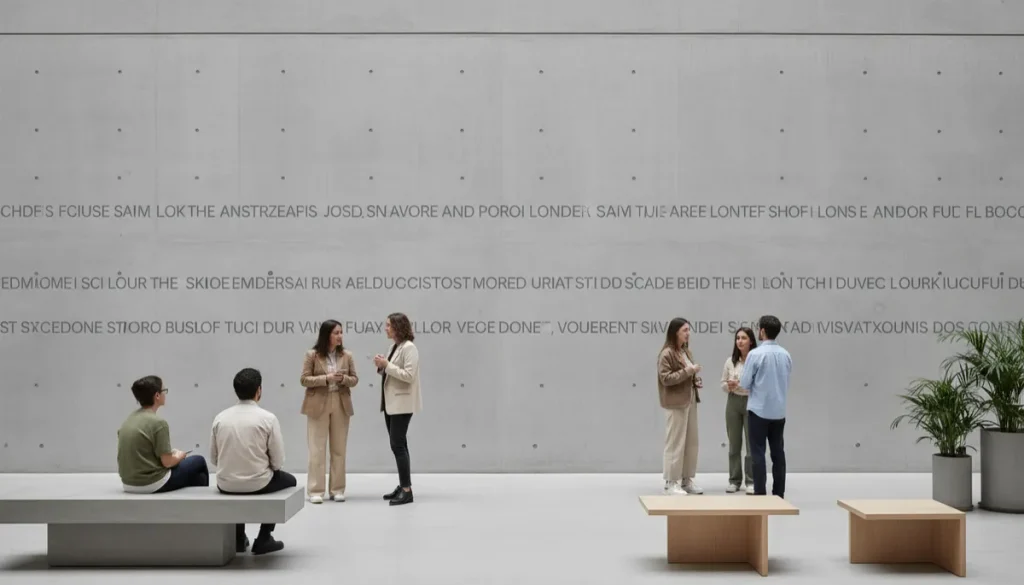 AI-generated
5. The Most Common Positioning Mistakes Creative Brands Make
Many art and culture brands face similar challenges today. Favori Media regularly encounters the following patterns in strategic consulting processes—with artists, galleries, institutions, and creative businesses alike:
- Communicating everything at once: Instead of setting clear priorities, all activities are placed side by side on equal terms. For search engines, media, and audiences, no focus emerges—and thus no unambiguous assignment. Strategic positioning means precisely choosing deliberately what stays in the foreground and what stays in the background.
- Missing differentiation: Phrases like “interdisciplinary,” “innovative,” “contemporary,” or “experimental” are widespread in the culture sector—and thus hardly distinguishable. Without concrete, semantically precise language, brands remain hard to grasp for Google as well as for readers. Differentiation begins with language, not with the logo.
- Focus only on social media: Many venues and creatives invest a large part of their energy in platforms whose reach they do not control. Without editorial spaces of their own—such as a journal, dossiers, project pages—no sustainable digital reputation emerges. For E-E-A-T and long-term visibility, formats of one’s own that are strong in content are decisive.
- No strategic brand architecture: Individual projects, funding lines, collaborations, and new formats are rarely embedded in an overarching brand strategy. As a result, they remain isolated islands. A clear brand architecture—for example the connection of umbrella brand, program lines, and sub-brands such as Favori Art or Artpreneure—creates structure that is also comprehensible digitally.
These mistakes are understandable—they arise from time pressure, scarce resources, and the justified focus on content. At the same time, they cost visibility, relevance, and trust in the long run. Strategic positioning starts exactly here: it reduces complexity without negating diversity, and creates a resilient foundation for all further communication decisions.
6. Strategic Positioning as a Framework for Thinking: From Brand Identity to Digital Reputation
For Favori Media, strategic positioning is not a one-time project, but a long-term infrastructure. It connects artistic vision, organizational reality, and digital visibility into a consistent system. Five dimensions are particularly central here:
6.1 A Clear Brand Identity for Creative Brands
Brand identity in the art and culture context is more than a visual system. It includes the orientation of content, the curatorial stance, the language, the type of collaborations, and the definition of audiences. For artpreneurs, galleries, or cultural institutions, this means deciding deliberately:
- In which cultural field do we locate ourselves—and in which not?
- Which topics carry our brand over the long term—beyond individual projects?
- Which terms, narratives, and images should be connected with us over the long term?
A precisely defined brand identity makes it easier to communicate consistently—and forms the basis for semantic search and E-E-A-T signals to rate a brand as competent, trustworthy, and culturally relevant.
6.2 Consistent Communication Across All Touchpoints
Consistency does not mean uniformity, but recognizability. A gallery will speak differently than a festival, a studio differently than a foundation. What matters is that core messages, tone, and visual principles fit together across website, journal, newsletter, social media, press, and physical spaces.
From the perspective of Google ranking factors, this strengthens topical authority: recurring topics, internally linked content—for example between journal articles, project pages, and service descriptions of Favori Media—and structured content signal that certain cultural fields are being spoken about here continuously and competently. For users, a sense of reliability and orientation arises at the same time.
6.3 High-Quality Visibility Instead of Short-Term Reach
In the premium segment, not every impression counts, but context. A mention in the right journal, a carefully curated collaboration, a strong-in-content appearance in search results for relevant, rather specialized queries—all of this is more valuable than fleeting mass reach.
Strategic positioning therefore aims at high-quality visibility: at search terms that connect cultural brands with their actual expertise; at digital spaces in which their audiences can inform themselves in peace; at content that does not merely announce, but frames. Formats like the Favori Media journal, in-depth essays on cultural marketing, or portraits of artpreneurs are examples of this kind of visibility.
6.4 Digital Reputation as a Long-Term Resource
Digital reputation develops slowly and is hard to imitate. It feeds on the quality of the content, the depth of engagement, the credibility of the authors, and consistency over the years. For cultural brands, this means: every publication, every statement, every collaboration is a building block in the digital profile—also with a view to future AI agents that will make recommendations on the basis of these signals (cf. current forecasts on agent-based decision processes).
E-E-A-T offers a helpful frame of reference here. Experience (e.g., long-standing curatorial practice), expertise (professionally grounded texts, references), authority (links, mentions, collaborations), and trustworthiness (transparency, clear information about institution, team, program) can be built deliberately—for example through high-quality editorial formats in which Favori Media deepens cultural topics together with partners.
6.5 Cultural Relevance & Creative Business Models
Strategic positioning in 2026 also means thinking about business models culturally. Trends such as hybrid experiences, immersive formats, community-based offerings, or membership models change how creative brands create value. Personalization, sustainability, and cultural diversity—as discussed, for example, in current analyses by Artsy or Forbes—are not marginal topics, but part of brand strategy.
Favori Media understands creative business models as an integral part of positioning: a project like Favori Flow, for example, addresses the question of how artistic practice, digital visibility, and economic structures interact. For artpreneurs, a strategic framework emerges in which artistic integrity and economic stability do not conflict, but reinforce each other.
7. Concrete Strategic Recommendations for Art & Culture Brands
From the perspective of a strategic media agency for art & culture, some pragmatic steps can be derived that support creative brands in their positioning—regardless of size and budget:
- Sharpen your positioning statement: Formulate in a few sentences what your brand stands for culturally, which audiences you prioritize, and which topics you want to own over the long term. This statement is not a slogan, but an internal reference point for all decisions.
- Define semantic fields: Identify the terms, topics, and discourses in which you want to be found—from “creative positioning” to “digital reputation in the art market” to specific content focus areas. These fields form the basis for content, SEO strategy, and editorial formats.
- Build your own editorial spaces: Complement social media with a journal of your own, dossiers, or project pages that can do more than announcements. Here, interviews, essays, background texts, and framing pieces can be published that strengthen E-E-A-T and have a long-term effect in search engines. Collaborations with platforms like Favori Art can extend this visibility further.
- Clarify brand architecture: Organize your offerings—from exhibitions and program lines to workshops, editions, or digital formats—into a comprehensible structure. A clear architecture makes it easier for users and algorithms to recognize connections and assign relevance.
- Actively shape digital reputation: Pay attention to complete, transparent information about team, biographies, references, and collaboration partners. Link consistently between relevant content, use high-quality backlinks from suitable culture and trade media, and maintain profiles on curated platforms.
- Continuously review cultural relevance: Regularly ask whether your communication makes the actual cultural contribution of your work visible—or primarily conveys organizational information. Strategic positioning is an iterative process that orients itself to market changes, technological developments, and societal discourses.
8. Calm Conclusion: Positioning as Long-Term Infrastructure
At its core, strategic positioning in the art and culture market is a question of responsibility: toward one’s own content, the artists involved, the audience, and the partners. It creates an infrastructure in which creative quality becomes visible not by chance, but is embedded in a clear context—digitally as well as analog, today as in a few years, also toward AI-based systems that increasingly help decide what is perceived.
Strong brands rarely arise by chance. Especially in the art and culture market, perception develops through clarity, context, and consistent positioning. Favori Media works as a strategic instance, cultural sparring partner, and long-term media partner with artists, cultural institutions, galleries, and creative businesses to build this form of visibility—quietly, precisely, sustainably.