- Art Market
Visibility as Cultural Capital in the Art Market
Why visibility now makes cultural capital visible, and why its absence costs careers
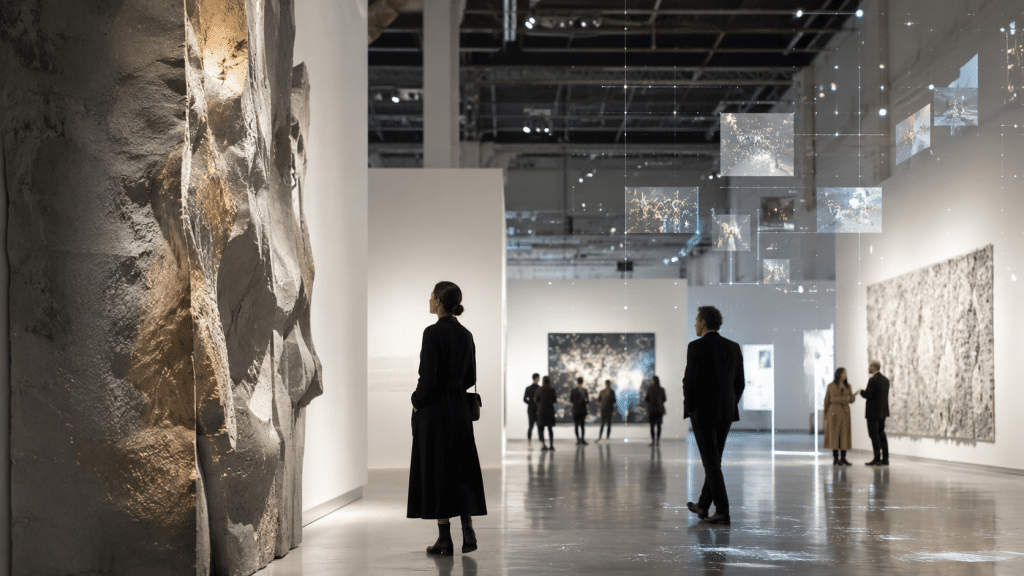
 AI-generated
In his analysis of cultural fields, the sociologist Pierre Bourdieu coined a concept that describes the art market more precisely than many economic models: cultural capital. By that he meant not merely money or possessions, but the cultural resources that give actors weight within a social field: education, taste, knowledge, institutional recognition, cultural competence, and the ability to be perceived as legitimate in particular contexts. This capital cannot be converted directly into money, but it determines who is heard in the cultural field, who gains access, and whose positions count.
What Bourdieu analyzed in the 1980s still holds true in principle. What has changed is the structure through which cultural and symbolic capital becomes visible, and with it the conditions under which it can be built or lost.
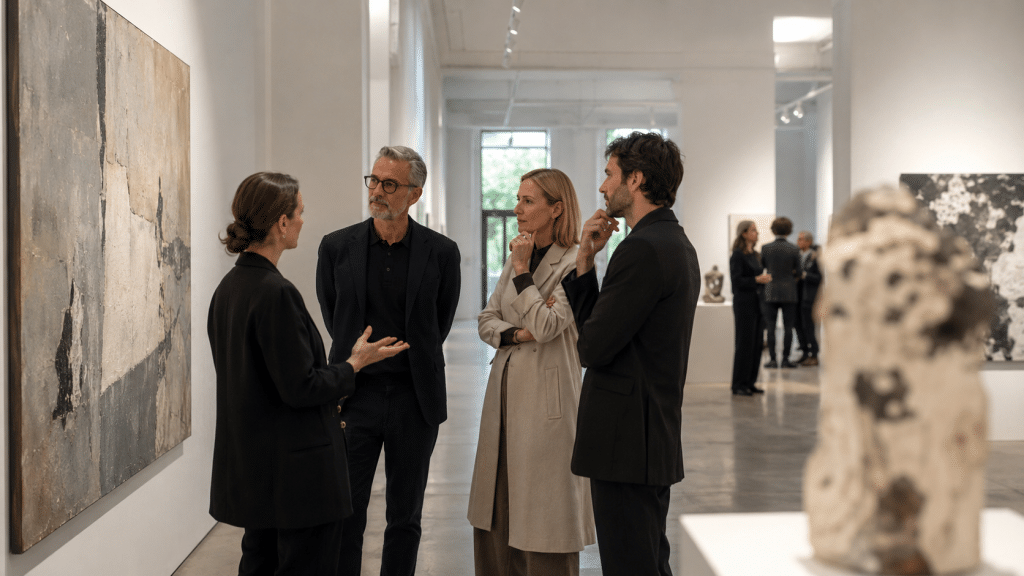
 AI-generated
What Cultural Capital Means Today
In Bourdieu’s analysis, cultural capital arose primarily through institutional pathways: training at recognized institutions, support from established players, publications in respected contexts. These pathways still exist. But alongside them, a new dimension has emerged that Bourdieu could not have known in this form: digital visibility as infrastructure through which cultural and symbolic capital can be built, made visible, and amplified.
An artist whose practice is visible in several high-quality digital contexts—in trade publications, in curated newsletters, on institutional platforms—accumulates a form of recognition that used to be possible mainly through physical presence in certain spaces. This digital visibility is not the same as institutional embedding, but it is complementary to it. In some contexts it can partly replace institutional embedding or even precede it.
This is a structural shift whose consequences are not yet fully understood.
Why the Absence of Visibility Now Carries an Active Cost
A common stance among artists and cultural professionals goes: I don’t need visibility, I need good work. The quality speaks for itself. At its core, this stance is right—good work is the prerequisite. As a complete strategy, however, it is dangerous, because it overlooks a structural shift.
In a market where decisions increasingly rest on digital research—a curator googling a name, a collector vetting a gallery, a funding body assessing an applicant—the absence of visibility has concrete consequences. A practice that cannot be found online, cannot be placed, and comes with no context is not considered in these moments of decision. Not because it is any weaker, but because it is simply not legible.
The absence of visibility is therefore no longer a neutral position. It is an active decision against opportunities that are digitally structured. And the share of digitally structured decisions in the art market keeps growing.
How Visibility Contributes to Cultural and Symbolic Capital
Not every form of visibility generates cultural or symbolic capital. Reach alone—many followers, many clicks—is not cultural capital in the Bourdieusian sense. What counts is not the amount of visibility, but the quality of the context in which it takes place.
A mention in a recognized trade publication generates more cultural and symbolic capital than a thousand likes on a platform post. A link from a respected institution conveys more trust capital than a viral moment with no institutional context. This hierarchy of contexts corresponds precisely to Bourdieu’s analysis of field structure: what counts is not absolute attention, but recognition by the right actors in the right field.
For a visibility strategy, this means the decisive question is not how much visibility is generated, but where. In which contexts does a practice appear? Who cites, links to, or recommends it? Which institutions associate themselves with it? These questions determine whether visibility contributes to cultural and symbolic capital or remains without consequence.
 AI-generated
The Strategic Consequence
What follows for artists, galleries, and cultural institutions?
The first conclusion is a reassessment of visibility work: not as self-promotion, not as a distraction from the actual work, but as part of the capital accumulation that sustains a career or an institution in the cultural field.
The second conclusion concerns selection. If not every form of visibility generates the same cultural or symbolic capital, it pays to be selective. Fewer appearances in stronger contexts are more effective than many in weak ones.
The third conclusion is about time: cultural capital accumulates slowly. It cannot be built through short-term campaigns, but through continuous presence in relevant contexts over time. Those who understand this plan visibility work not in campaign cycles, but as lasting strategic infrastructure.
Visibility is not decoration. In a market that increasingly researches, vets, and classifies digitally, it is a central infrastructure of cultural and symbolic capital formation. Its absence is not a neutral stance. It is a decision with consequences.
How this structure—visibility, trust, and the quiet architecture of cultural decisions—plays out concretely in the art market is described in the report “The Silent Market”, based on five structural observations.
Favori Media develops strategies for cultural visibility, digital reputation, and lasting perceived value with artists, galleries, and creative entrepreneurs—so that artistic work is not only findable but appears in the right contexts, builds trust, and is perceived as culturally relevant.