- Artist Careers
- Strategy & Positioning
Residency Programs for Artists | International Visibility
Why residency programs are the underestimated lever for international artist careers
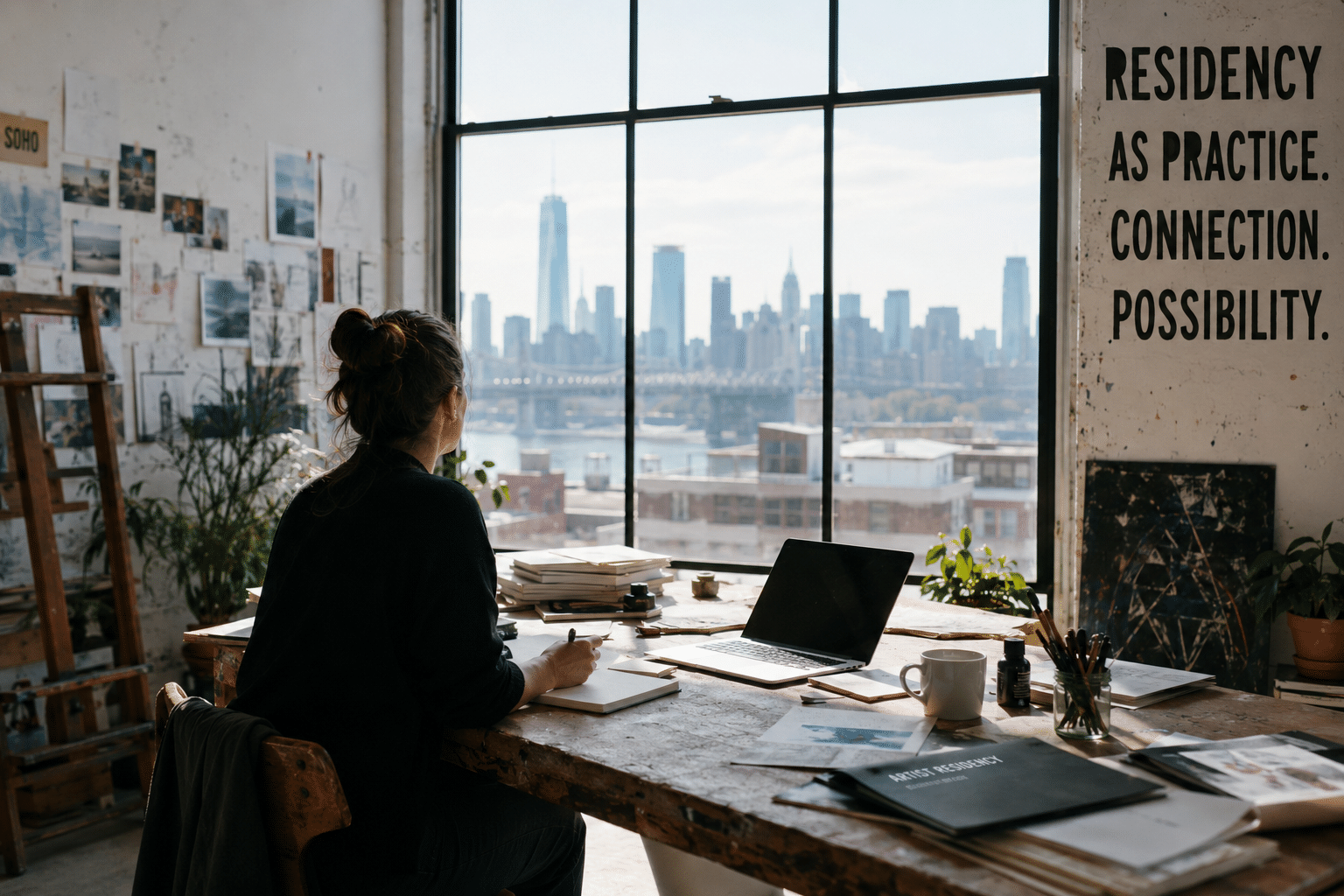 AI-generated
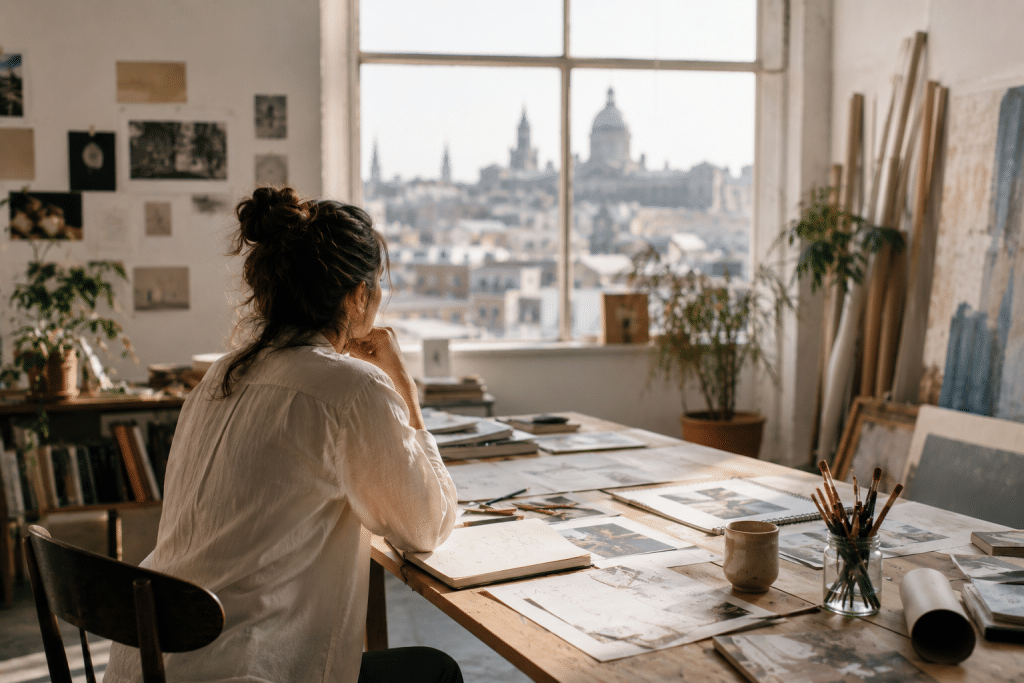
Most artists see a residency program as what it promises on paper: time. Space. Distance from everyday life. An opportunity to develop new work or deepen an existing practice. That is not wrong—but it falls short.
A residency program, understood strategically, is one of the most effective instruments for international positioning available to an artist. In compressed form, it delivers what is hard to build through individual exhibitions or applications: institutional connection, network access, cultural context—and a form of legitimation that does not follow from the mere creation of a work.
Those who use residencies only as creative freedom give away the strategically strongest part.
 AI-generated
What a Residency Program Actually Delivers
Behind the official description of every residency program—studio, accommodation, sometimes a stipend—lie three resources that are more substantial for a career than the finished work that results at the end.
First: institutional embedding. Those who complete a residency at a recognized institution—be it ISCP in New York, the Cité des Arts in Paris, Iaspis in Stockholm, or Künstlerhaus Schloss Balmoral in Germany—appear in an institutional context that transfers reputation. This embedding remains permanently visible in biographies, on websites, and in press materials. It signals to curators, program directors, and collectors: this practice was considered worthy of support by an independent cultural player. That is trust infrastructure.
Second: network access. Residencies bring artists from different cultures and disciplines into spatial proximity. In this context, connections arise that could hardly be established through applications or social networks—to other artists, to curators who are working as artists in residence, to local institutions that regularly cooperate with the residency house. This network is often the part of a residency that has a lasting effect in the long run, not the work produced.
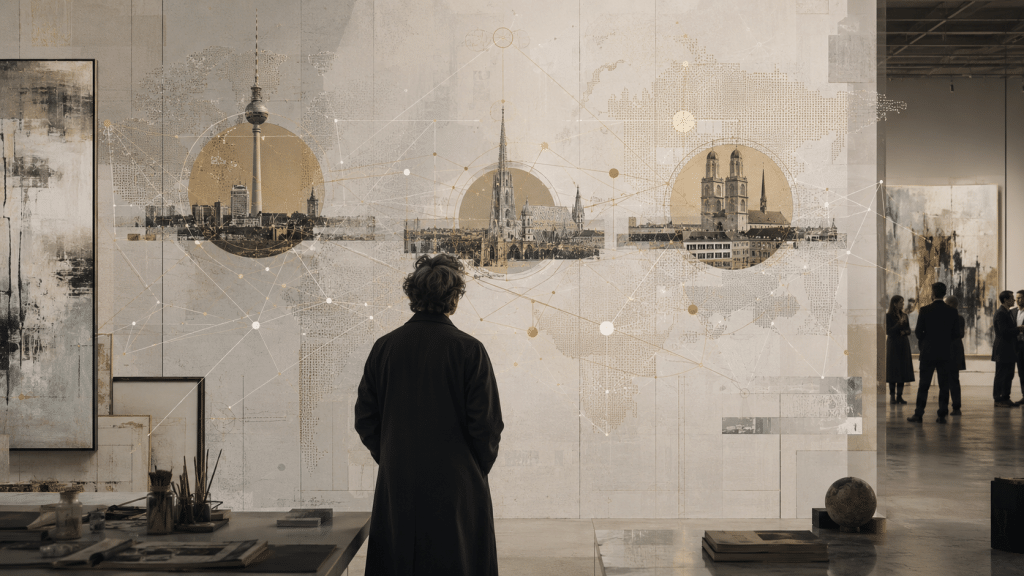
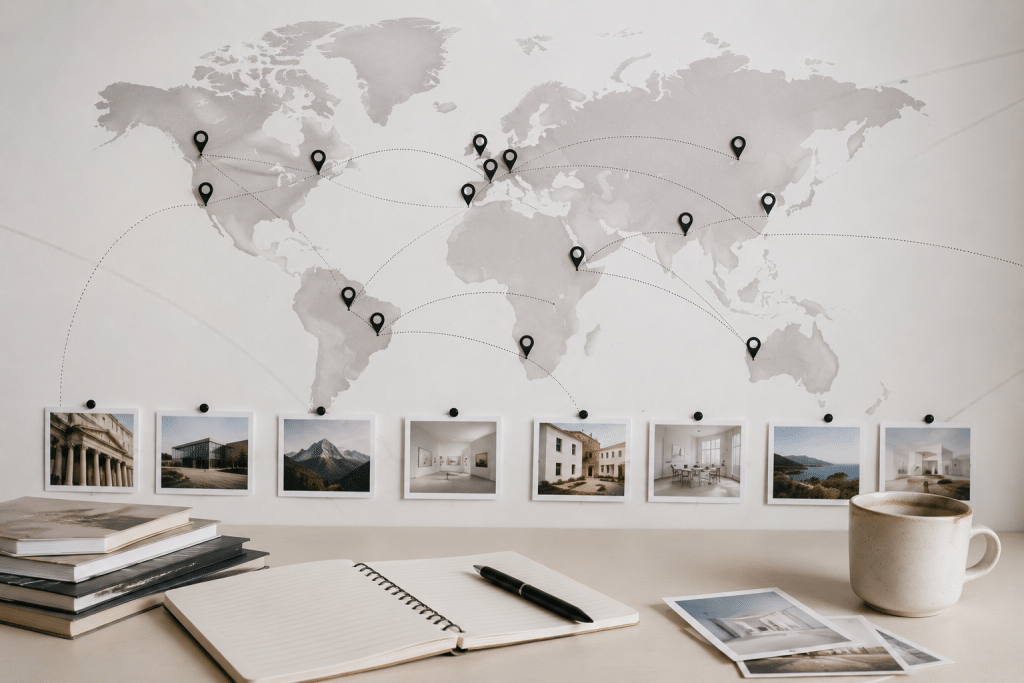
Third: geographic context. Especially for artists from the DACH region (Germany, Austria, Switzerland) who want to build international visibility, a residency in another cultural metropolis delivers something that cannot be produced digitally: physical presence in another cultural market. This presence makes it possible to visit local galleries, institutions, and media—not as a visitor, but as a guest of a recognized institution. That changes the way encounters unfold.
Why Most Artists Use Residencies the Wrong Way
The most common pattern is what could be called a production focus: the artist arrives, works in the studio, produces a work or a series—and leaves again. The residency was an intensive working phase. What it could have been strategically remains unused.
This production focus is understandable. It corresponds to what many residency calls suggest. But it confuses means and ends. The work that emerges is the visible result. What counts afterward is the question: What traces has the residency left in a cultural sphere? Who knows this artist now who did not know them before? Which institutional doors have been opened—or at least left ajar?
These questions arise only if a residency is conceived from the start as a strategic positioning instrument—not as a well-earned creative retreat.
The Three Strategic Levels of a Residency
A residency, strategically thought through, operates on three levels at once.
Level 1—Creating the work: The obvious. A new work, a new series, a deepening of one’s own practice. This level is the visible output—and it matters because it provides material for all further steps.
Level 2—Building a network: The middle level. Who are the relevant players at the residency location? Which galleries, institutions, curators, media professionals are interesting for one’s own practice? These connections do not arise by themselves—they have to be actively sought and nurtured. A studio visit, once offered, can be the beginning of a relationship that generates an exhibition invitation years later.
Level 3—Visibility as an occasion for communication: The most frequently missed level. A residency is a legitimate, authentic occasion for communication. It gives reason for press releases, for posts in one’s own digital communication, for contacting local cultural media. The question is not: Should I communicate during the residency? But: Who should know about this residency—and why?
 AI-generated
Which Residencies Are Strategically Relevant
Not every residency is equally effective. The choice of program is itself a strategic decision that often gets too little attention.
Relevant questions when choosing: Which cultural field does this institution represent? Which galleries, curators, and institutions are connected or associated with it? Does the institution have international visibility—or is it primarily locally rooted? How does the program relate to one’s own career goals?
A residency program in a city with an active, international art market—New York, London, Paris, Berlin, Seoul—delivers different access than a program in an inspiring but isolated location. Both can be artistically significant. Strategically they are differently effective.
The quality of the network and institutional connections are thus selection criteria that should stand on an equal footing with artistic fit.
Residency as Infrastructure—Not as an Episode
The strongest argument for a strategic use of residencies is a long-term one: residencies are nodes. They can be the beginning of a presence in a cultural sphere, not just a stay. The question at the end of a residency is therefore not: What did I produce? But: What remains?
What remains is a matter of preparation. Those who define before the residency which connections they want to build, which institutions they will visit, which communication traces they want to lay—they leave the place with substantially more than a new work. They leave it with the beginning of an international positioning.
Residency programs are one of the few forms of art funding that enable artistic development and strategic positioning at the same time. Those who use them only for the first give away the second.
Favori Media supports artists in the strategic building of international visibility—from positioning and digital reputation to the communication architecture around exhibitions, residencies, and career steps.