- Artist Careers
- Industry Analysis
- Music
Musician Visibility in the Streaming Age
Why music careers in the streaming age need identity, not an algorithm strategy
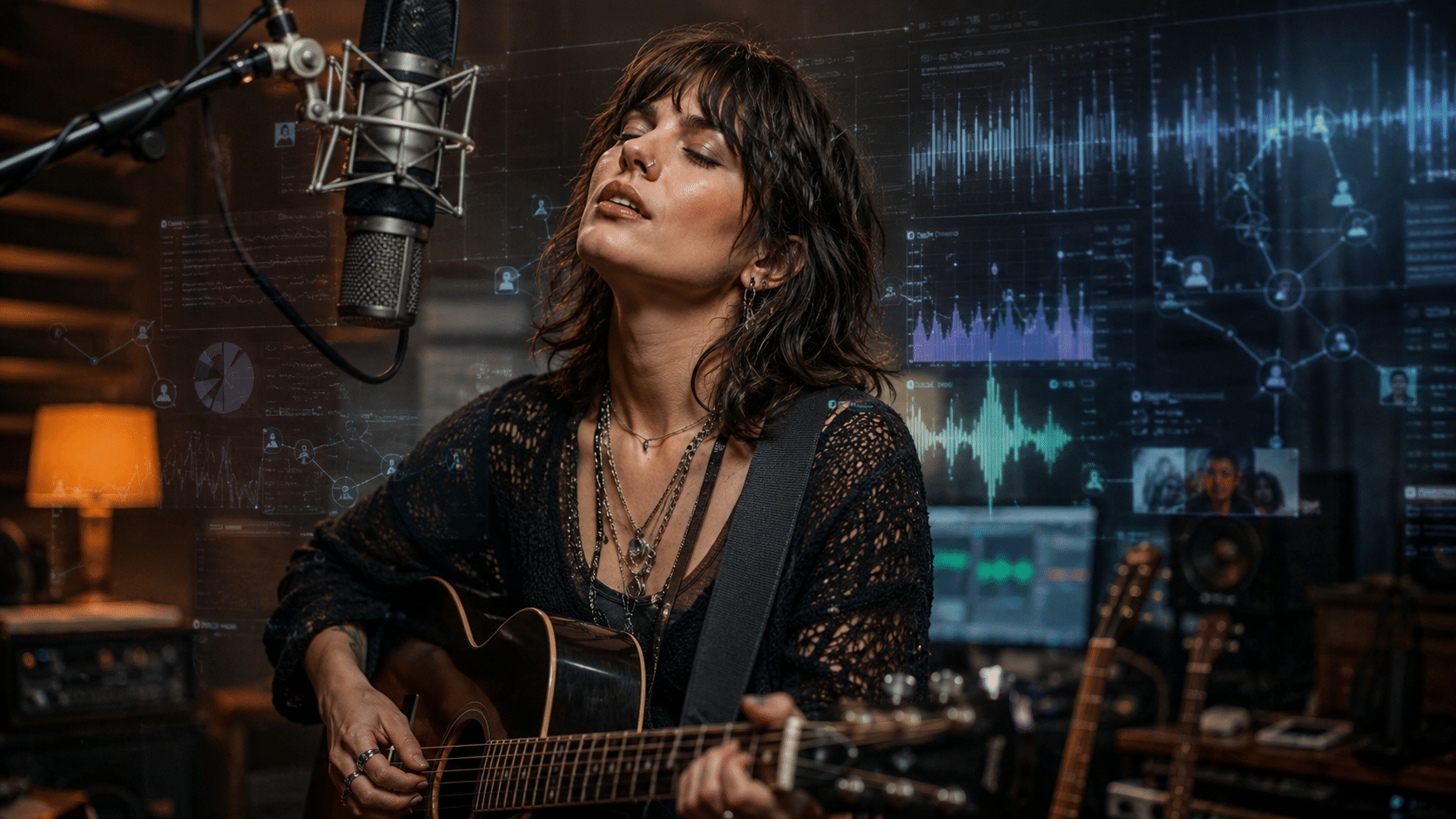 AI-generated
Never has more music been listened to. And never has it been harder, as a musician, to build a career that lasts longer than a moment.
That is not a contradiction—it is the actual logic of the streaming age. Spotify alone records around 100,000 newly uploaded tracks every day. Visibility is technically accessible as never before. And precisely for that reason it is structurally worth less than ever. What counts in the streaming context is not presence, but identity. Not the question of whether music is heard—but whether it is recognized, remembered, and sought out.
Most consulting offers in the music field revolve around algorithms: playlist placements, release frequency, metadata optimization, pitch strategies for editorial playlists. None of that is wrong. It is just tactics. And tactics without identity is like a well-lit sign without an address.
 AI-generated
What Streaming Has Really Changed
The democratization of access is real. A musician from Leipzig or Istanbul can today be heard worldwide without a label, without a publisher, without a distribution deal. That is a structural shift that has fundamentally changed the music market.
Less discussed is what this democratization has produced on the other side: an attention economy in which curation is the new bottleneck. Not production, not distribution—curation. Who decides what gets heard? Algorithms that optimize behavior, not quality. Playlists that categorize by mood, not by artistic stance. And in this system, what is rewarded is what works—what is streamed, skipped, or saved in the moment. Not what lasts.
The result is a generation of musicians who optimize by formula: the perfect song length, the hook in the first three seconds, the release every two weeks, the title with the right keyword. All of that can generate streams. A career rarely results from it.
The Difference Between Streams and Careers
Artistic careers do not arise through reach, but through recognition. A person who hears a song by Arooj Aftab recognizes it as Arooj Aftab—even without the title. A person who hears a song by Bon Iver recognizes a sound world, a stance, an aesthetic, before reading the name. That is identity. And precisely this identity cannot be produced through algorithm strategy. It arises through consistent artistic decisions over time.
What unites great careers in the streaming age is not algorithm success. It is often the opposite: artists who have clearly decided who they are—and have communicated that decision consistently in every release, every image, every conversation. Identity works as a filter. It attracts the right audience and holds it. Algorithms can generate attention. Identity generates attachment.
What Identity Concretely Means for Musicians
Identity is not a genre. A musician who says “I make alternative pop” has not yet formulated an identity. Genre is categorization, not stance.
Identity arises from the sum of concrete decisions: Which production aesthetic is recognizable and consistent? Which themes, images, references keep recurring? In which cultural context does the music position itself—which other artists, spaces, discourses are deliberately invoked or avoided? Which visual decisions consistently accompany the music?
Strong musical identities are rarely accidents. They are the results of a deliberate process: Who am I as a musician—and what do I want to stand for, even if that excludes part of the possible audience? This question is the actual starting point of strategic visibility in the music market.
Digital reputation in music does not arise primarily through streams. It arises through the consistency with which an artist is perceived in different contexts: in press reviews, in curated playlists of editorial quality, in festival announcements, in interviews, in the visual language of releases. Together, these traces create a picture—and this picture decides whether a musician is perceived as an actor in the cultural field or as content in the data stream.
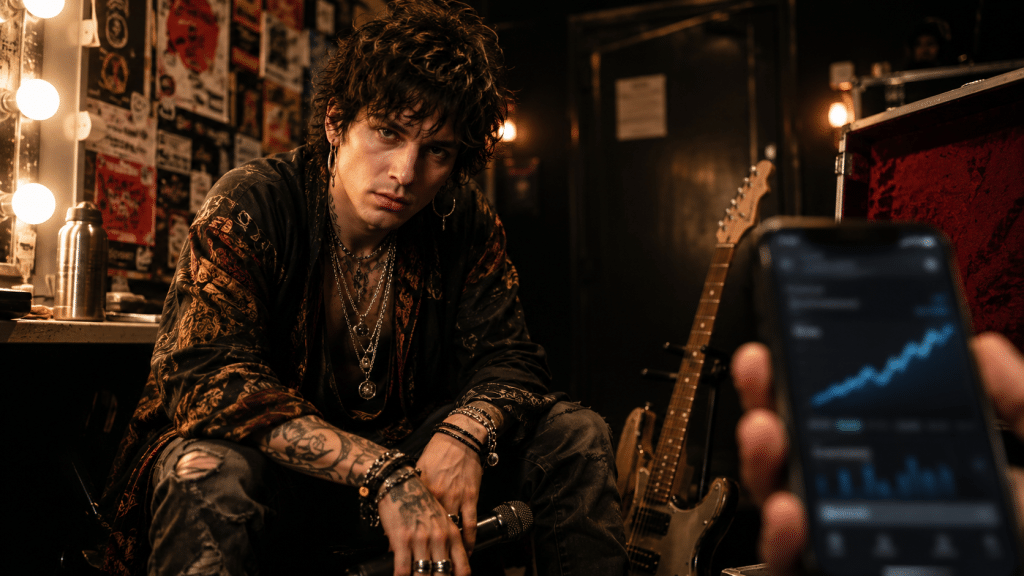 AI-generated
Why Streaming Success Cannot Replace Identity
A viral moment on TikTok or a playlist placement on Spotify can drive streams into the millions. What happens afterward depends entirely on whether a recognizable artistic identity stands behind it—or not.
Musicians without an identity foundation often experience virality as a dead end: the audience attracted by a moment finds no coherent world in which to stay. It moves on. The algorithm notices. The next placement becomes harder. The cycle turns in the opposite direction.
Musicians with a clear identity experience the same phenomenon differently: a moment of attention leads new audiences into a world that already exists—with context, depth, history. This audience stays. It spreads the word. It takes the music into its life.
This is not a romantic argument against algorithm work. It is a structural one. Algorithm strategy is an amplifier. It amplifies what is already there. Without identity, it only amplifies volume.
Strategic Consequence: Identity Before Reach
What follows for musicians who work professionally today?
The first step is not the question of the right channel or the right release frequency. It is the question of one’s own positioning: What does this music stand for—beyond genre and style? Which stance, which aesthetic, which references are so consistent that they work as markers of recognition?
Only once these questions are answered does reach work make sense. Then every playlist placement, every press review, every social media moment amplifies an identity that already exists. Then digital reputation builds—not as an accumulation of streams, but as a growing, consistent picture in the cultural field.
Streaming is infrastructure. Identity is foundation. Those who confuse the two build on sand—even if it looks good for a while.
Favori Media accompanies musicians and creative entrepreneurs in building strategic visibility and digital reputation—as a thinking partner at the intersection of artistic practice and the cultural market.