- Art Market
Art Fairs in the Digital Age: A Necessary Redefinition
Why art fairs need to redefine their function in the digital age
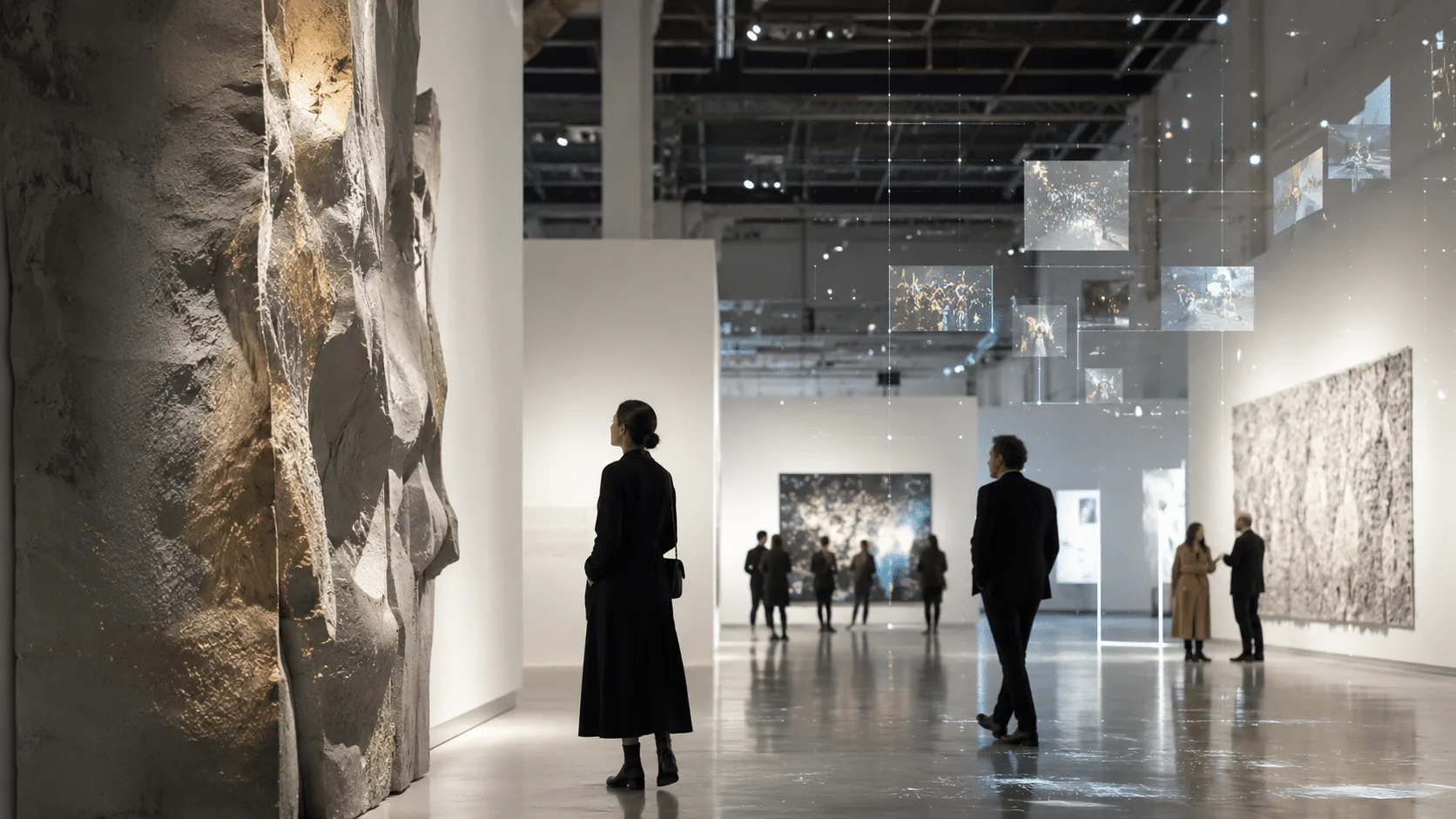 AI-generated
Art fairs were the place where the market met: marketplace, network and showcase of reputation in one. Digital infrastructure now takes over part of these functions. For galleries, this means planning their presence so that it also works outside the fair hall.
For decades, art fairs were the concentrated site of the art market. Not because the most important works were shown there, museums and biennials did that, but because the most important decisions were made there. Collectors, gallerists, curators, artists, institutional representatives: all at the same time in the same place. Prices became transparent, negotiations were conducted, relationships were forged or deepened. The fair was marketplace, networking event, and reputation showcase in one.
This concentration of functions was the fair’s real value, not the works on the walls. And it is precisely this concentration that is under pressure in the digital age.
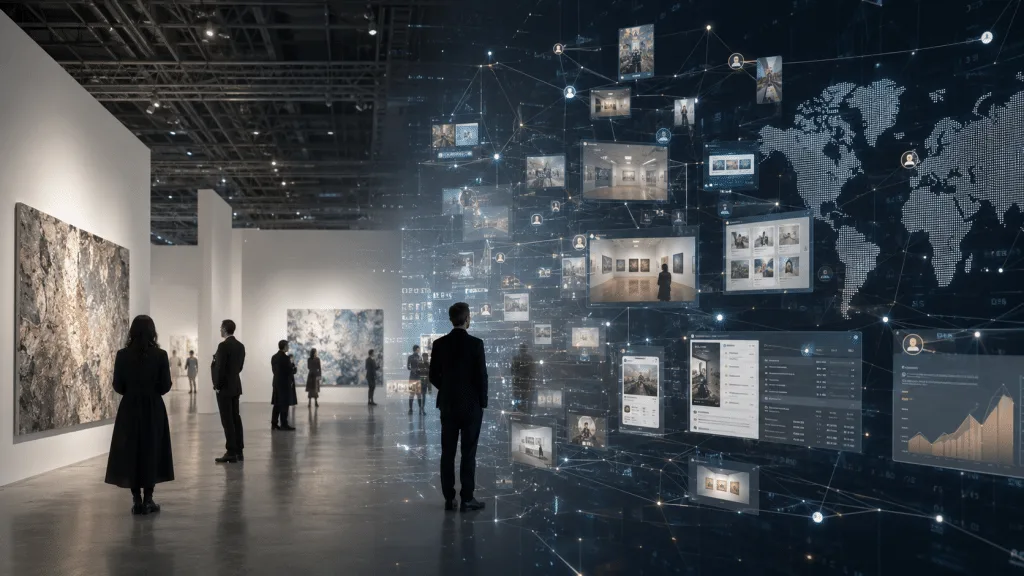 AI-generated
What Has Changed Structurally
Three of the central functions that art fairs have historically fulfilled are now at least partly taken over by digital infrastructure.
Price transparency, once the domain of the fair, is now more widely available than ever through platforms like Artsy, Invaluable, or the public databases of major auction houses. A collector no longer has to travel to Basel or Miami to develop a feel for market prices.
Network access, which used to require physical encounter, has partly shifted to digital channels. Gallerists communicate with international collectors via Instagram, newsletters, and digital viewing rooms. The relationship no longer arises exclusively in a conversation at the fair.
First sightings of new positions, once a clear advantage of the fair, are increasingly decentralized today through digital exhibition formats, online presentations, and social networks. A gallery in Seoul can now present a position from Buenos Aires internationally without needing a physical fair.
That doesn’t mean art fairs are obsolete. It means their original value has to be re-established, because it no longer applies automatically.
What Fairs Cannot Simply Become: Hybrid
The obvious answer to this development is: fairs have to become hybrid. Physical presence supplemented by digital viewing rooms, live streams, online catalogs. This answer is not wrong, but it falls short.
The problem with hybrid formats is a fundamental one: they try to combine two different logics that weaken each other. The physical fair thrives on concentration, everything in one place, at the same time, with full attention. The digital format thrives on distribution, accessible everywhere, at any time, in competition with everything else. These two logics cannot simply be added together without both losing.
Fairs that try to replicate digitally the same experience that works physically will almost always fail digitally. Not because the product is worse, but because the logic of attention is different.
What the Fair’s Real Function Could Be in the Digital Age
If price transparency, network access, and first sightings can be substituted digitally, the question remains: What can a physical art fair deliver that cannot be replicated digitally?
The answer lies in what technology structurally cannot do: the bodily encounter with a work that has its effect through its materiality, its size, its physical presence. And the social density in which it is not individual encounters but the simultaneous presence of many relevant actors that creates an atmosphere that itself carries information, about mood, about shifts in the market, about what is currently considered important.
These two elements, physical encounter with the work and social density, are what can make a fair irreplaceable in the digital age. But only if it is deliberately conceived as such. A fair that tries to concentrate as many galleries, as many works, as much program as possible in a tight space dilutes both qualities. A fair that is conceived with less, but more intensely, with more room for encounter and viewing than for sales presentation, could be exactly what the market needs in the digital age.
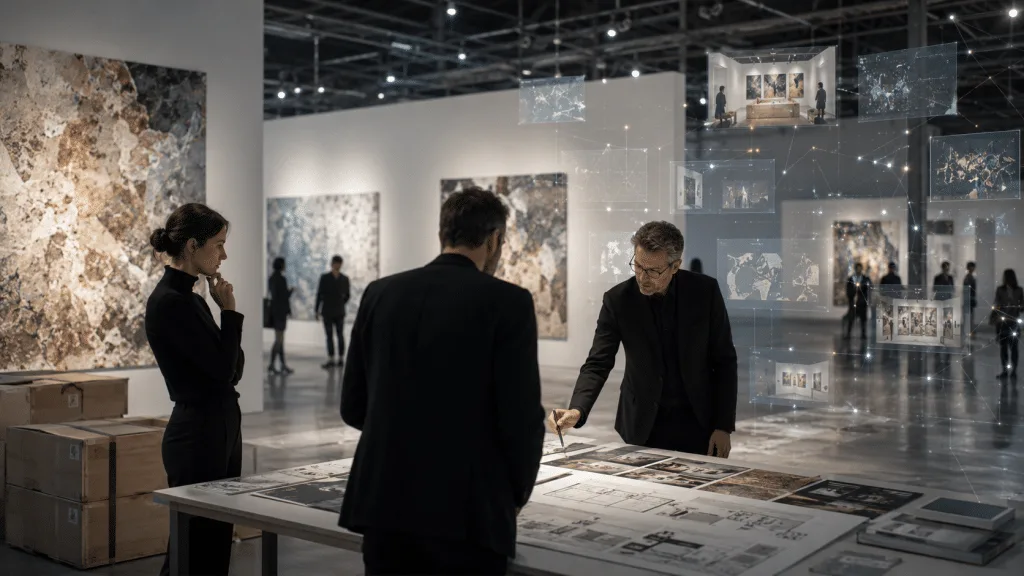 AI-generated
The Strategic Question for Galleries
For galleries making fair decisions, an analogous question arises: What is a fair presence still indispensable for today, and what are the more effective alternatives?
Taking part in a fair is expensive. Booth fees, logistics, insurance, staffing. The real costs of a fair presence exceed the direct sales revenue for many mid-sized galleries. What justifies it is the indirect value: visibility among collectors, network access, institutional attention.
If digital channels can increasingly generate these indirect values more efficiently, the calculation shifts. Not every fair participation makes equal sense for every gallery. The strategic question is not “Which fair are we present at?” but “Which fair presence generates, for us specifically, the value we cannot generate digitally?”
Art fairs will not disappear. But their place in the art market’s ecosystem will become smaller, more specific, and more demanding. Those who understand this earlier make better decisions, whether as a fair organizer, as a gallery, or as a collector.
Favori Media accompanies galleries, artists, and cultural institutions in strategically rethinking their visibility in the digital age, between physical encounter with the work, digital presence, and lasting cultural reputation.
Frequently asked questions
Are art fairs disappearing?
No. But their place in the art market ecosystem is becoming smaller, more specific and more demanding. Those who understand this early make better decisions.
Which functions do digital platforms take over?
Digital infrastructure takes over, at least in part, functions that fairs used to bundle, such as first contact and orientation. Personal encounter and trust remain their strength.
What does this mean for galleries?
The fair should be part of a larger strategy. A clear digital presence makes sure contacts do not break off before and after the fair.